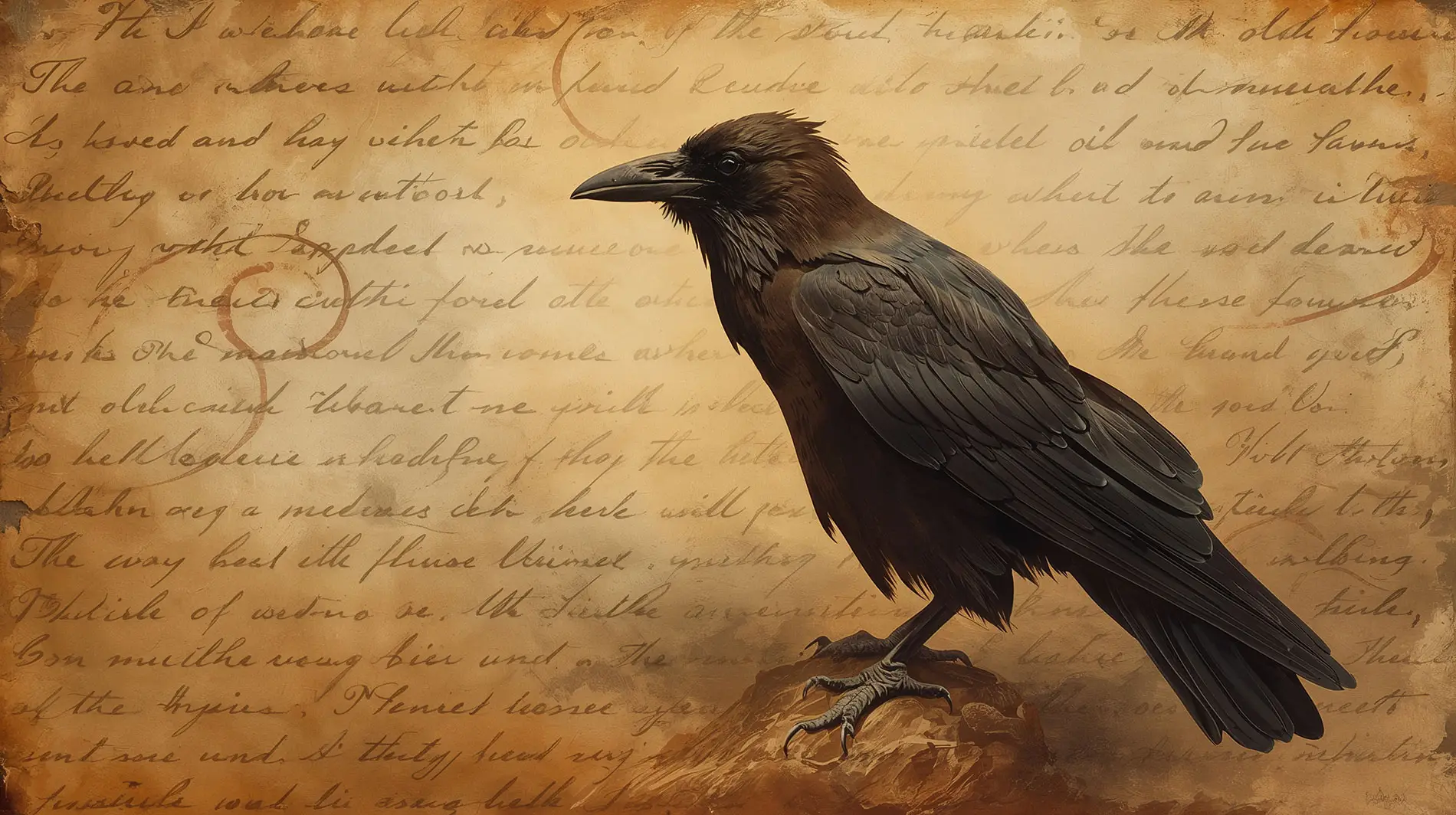
Crows and Ravens
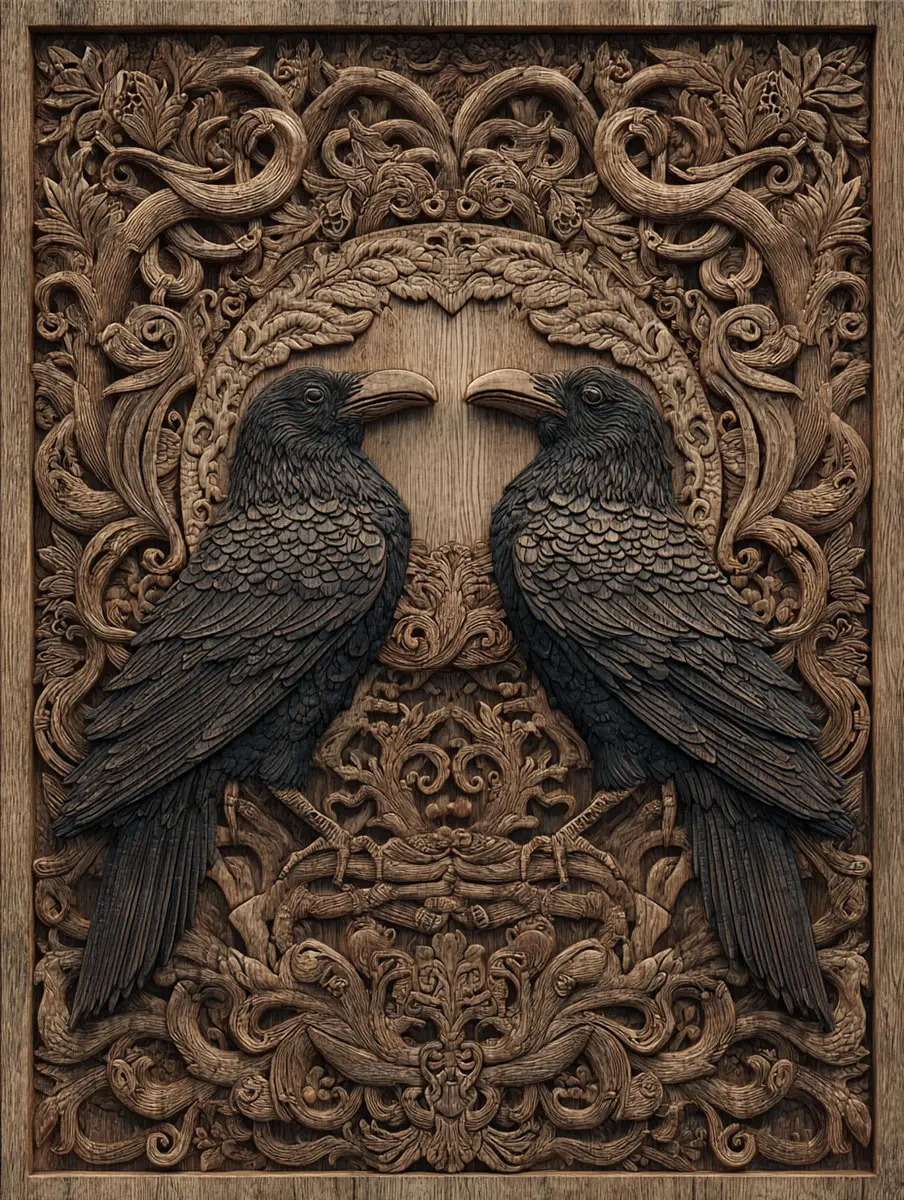
The Dark Messengers Between Worlds
Crows and ravens have captured human imagination since the dawn of civilization, emerging as perhaps the most complex and paradoxical mythical beings across cultures. Unlike the purely symbolic unicorn or the celestial phoenix, corvids earned their mythological status through their remarkable intelligence and behavior that humans could directly observe, their complex social structures, problem-solving abilities, and their presence at the crossroads of life and death as carrion feeders.
These black-winged creatures became bridges between the material and spiritual worlds precisely because they inhabited both realms so visibly. Their intelligence allowed them to learn human speech, making them the only animals that could literally “talk back” to humans, while their diet of carrion placed them at every battlefield, execution, and scene of death. This unique position transformed them from mere birds into messengers capable of traversing the boundaries between life and death, knowledge and mystery.
Norse Mythology: Huginn and Muninn, Thought and Memory
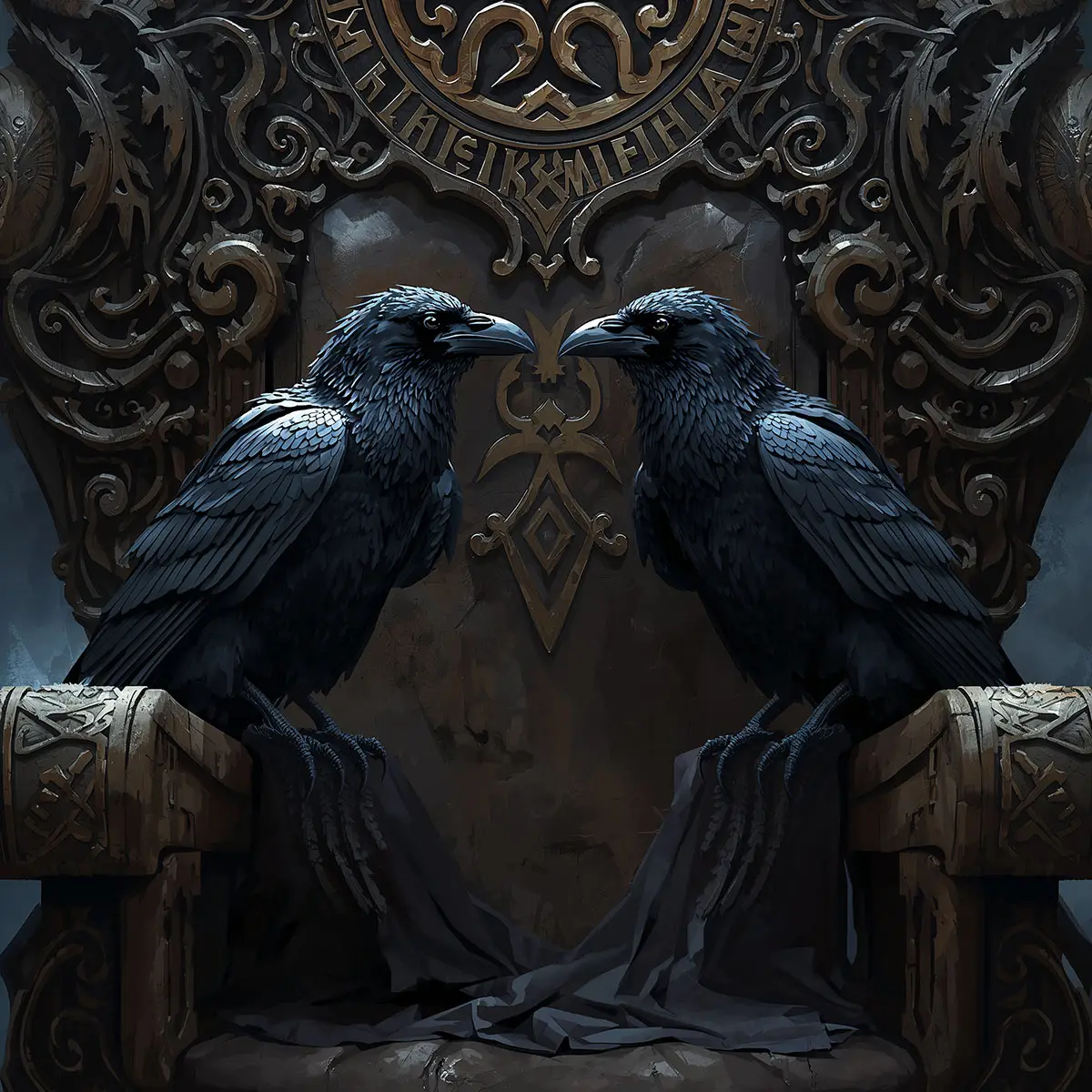
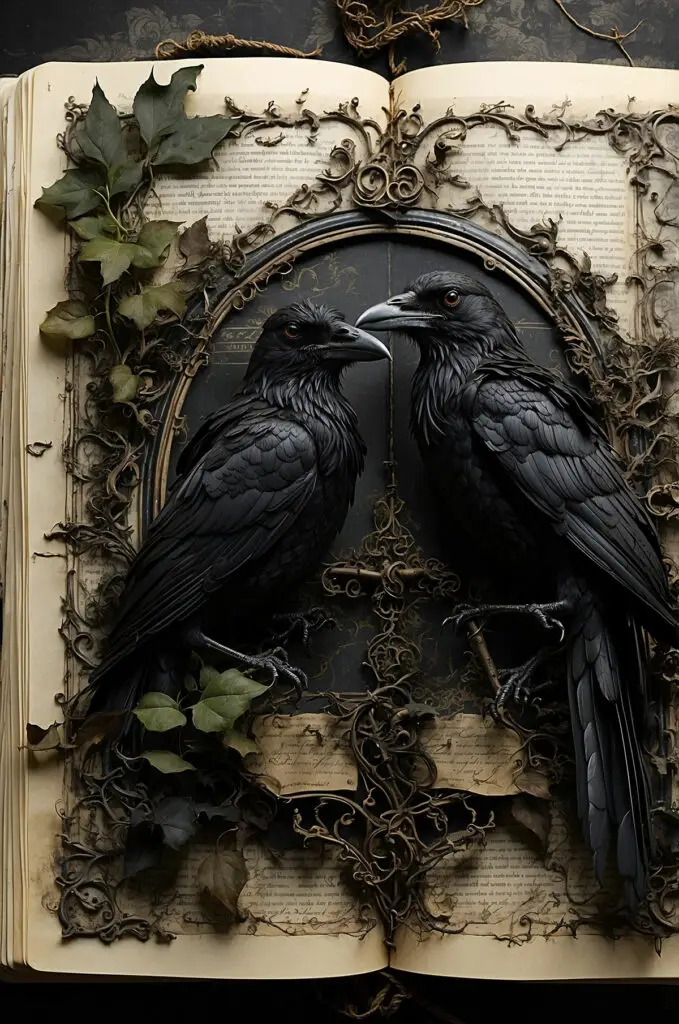
In Norse mythology, ravens reach their highest expression of divine intelligence through Odin’s companions Huginn and Muninn. These ravens, whose names translate to “Thought” and “Memory,” serve as extensions of Odin’s consciousness, flying across the Nine Realms each dawn to gather information and returning each evening to whisper their discoveries in the All-Father’s ears.
The Grímnismál reveals Odin’s deepest fear: that one day his ravens might not return. This anxiety reflects a profound understanding, Odin’s wisdom depends entirely on his ravens. Without Huginn, he loses his ability to think and analyze; without Muninn, he forgets the lessons of the past. The ravens are not merely Odin’s servants but the very faculties that make him the wisest of gods.
Norse warriors adopted raven imagery extensively, featuring ravens on banners, shields, and helmets to invoke Odin’s favor in battle. The raven banner itself became a symbol of divine protection and victory, carried by leaders from Harald Fairhair to the Norse-Gaels of Ireland. Even today, the Shetland Islands’ Up-Helly-Aa festival continues this tradition.
Celtic Traditions: The Morrigan and Battle Prophecy
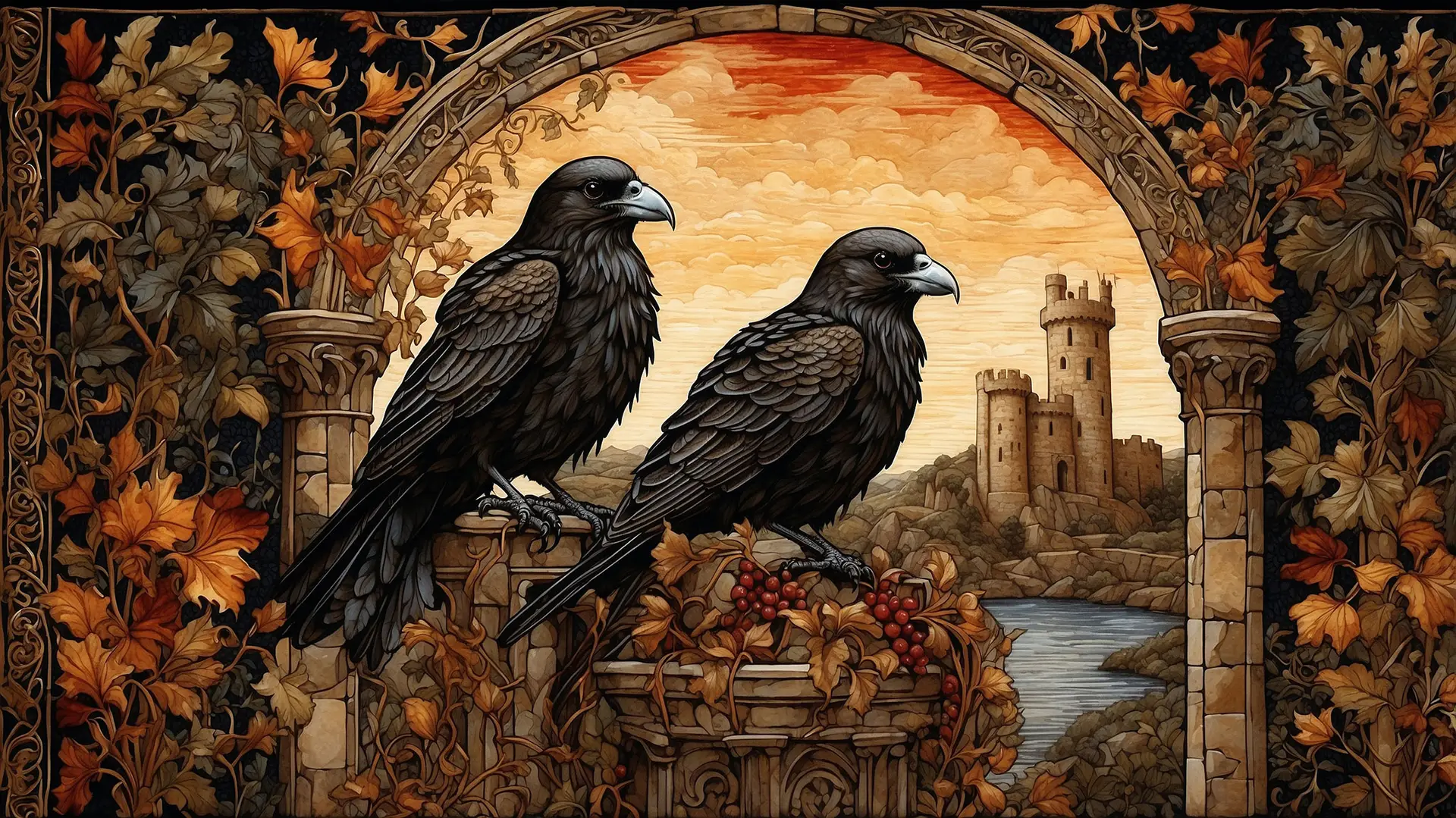
The Celtic Morrigan represents perhaps the most fearsome expression of raven power. This triple goddess, appearing as Badb, Macha, and Nemain, could take the form of a crow or raven, especially on battlefields where she would decide the fate of warriors. Her cry was said to foretell bloodshed and death, while her presence on the battlefield could turn the tide of war through psychological terror.
In the Ulster Cycle, the Morrigan’s relationship with the hero Cú Chulainn demonstrates the complex nature of raven power, sometimes protective, sometimes hostile, always transformative. When she finally perches on Cú Chulainn’s shoulder as a crow, it signals his death, showing how ravens serve as psychopomps guiding souls from life to death.
Celtic druids read the flight patterns, calls, and behavior of ravens for prophecy and guidance. The very name “Lugdunum” (modern Lyon) may derive from “Hill of the Crow,” where ravens guided the city’s first builders, demonstrating how deeply embedded raven wisdom became in Celtic civilization.
The creator and the trickster
Native American: Raven the Creator-Trickster
Native American traditions, particularly among Pacific Northwest tribes, present Raven as both the ultimate creator and the ultimate trickster. The Haida, Tlingit, and other coastal peoples credit Raven with bringing light to the world by stealing the sun, moon, and stars from a greedy chief who kept them hidden in boxes.
Raven’s most famous feat involved transforming himself into a pine needle, being swallowed by the chief’s daughter, and being reborn as her child to gain access to the boxes of light. Once he had stolen the light and released it to the world, the smoke from carrying fire blackened his originally white feathers, explaining why ravens are black today.
This dual nature, creator and trickster, reflects Raven’s complex role in indigenous spirituality. Raven creates through selfishness rather than altruism, yet his selfish acts consistently benefit humanity. He represents the understanding that creativity often emerges from desire, that wisdom can arise from folly, and that transformation frequently comes through disruption.
Symbolism and Deeper Meanings
Intelligence and Memory as Spiritual Powers
The sacredness of intelligence
Ravens and crows embody the sacredness of intelligence itself. Their ability to solve complex problems, remember faces across decades, and pass knowledge to offspring makes them symbols of wisdom that transcends instinct. The pairing of Huginn ("Thought") and Muninn ("Memory") reveals that true wisdom requires both active thinking and the preservation of experience. This combination represents the highest form of consciousness, explaining why ravens became associated with gods of wisdom across cultures
Death and Renewal as Transformation
Ravens serve as guides between worlds, because they understand that death is transformation rather than ending. Their presence at battlefields and execution sites is not morbid fascination but professional duty as spiritual midwives helping souls transition from physical to spiritual existence. This role makes ravens symbols of acceptance rather than fear of mortality. They represent the wisdom that comes from witnessing countless endings and beginnings, from understanding that each death creates space for new life.
Prophecy and Hidden Knowledge
Ravens possess "raven's knowledge", the ability to see what is hidden or lost. Their high vantage point from flight, combined with their intelligence and memory, makes them ideal gatherers of information. This surveillance capability transforms them into oracles capable of revealing not just present facts but future possibilities. Their gift for mimicry adds another dimension to their prophetic power : they can speak in human voices, delivering messages that blur the line between divine revelation and natural phenomenon.