The Kitsune

The Enigmatic Origins of the Kitsune
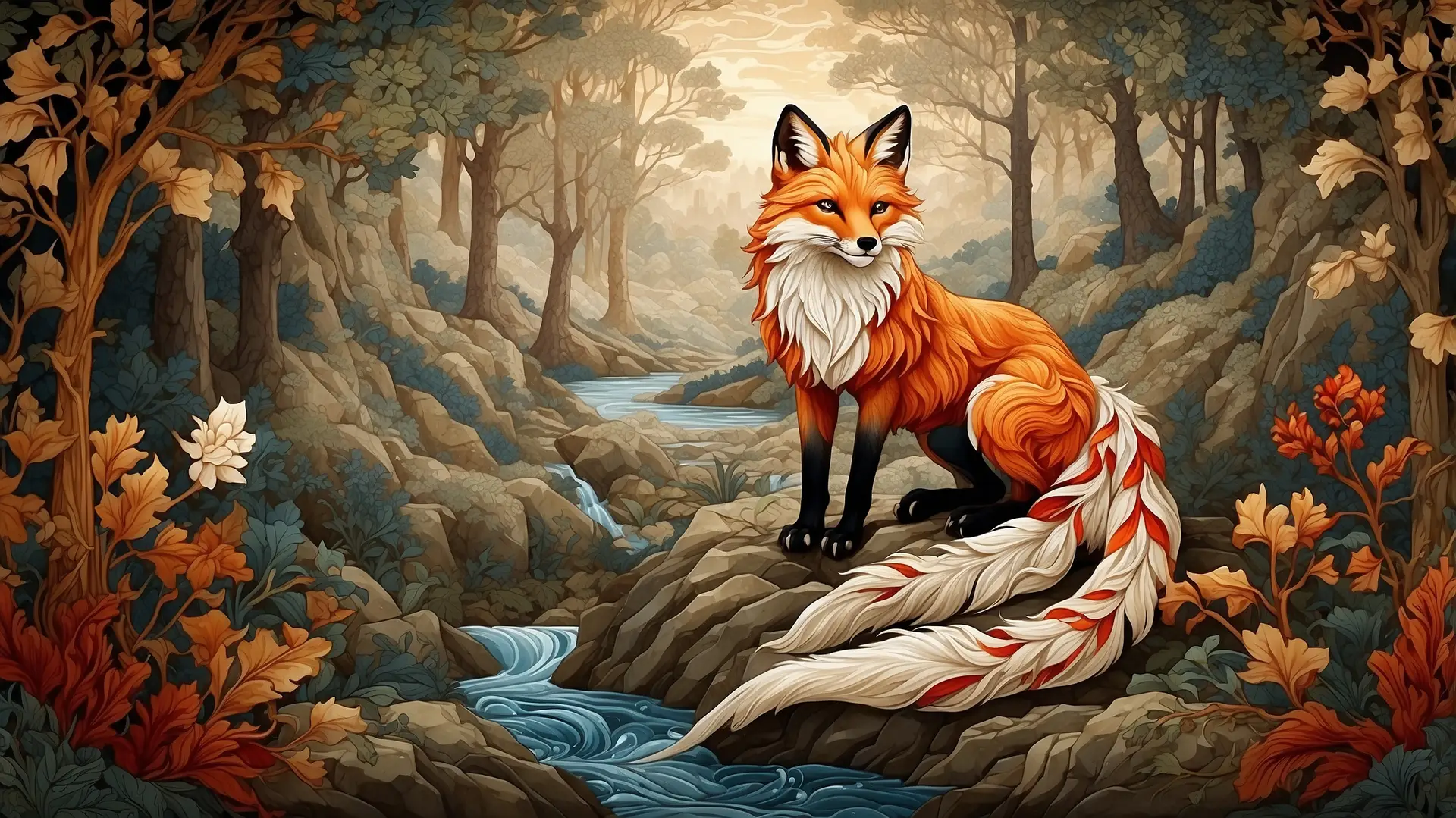
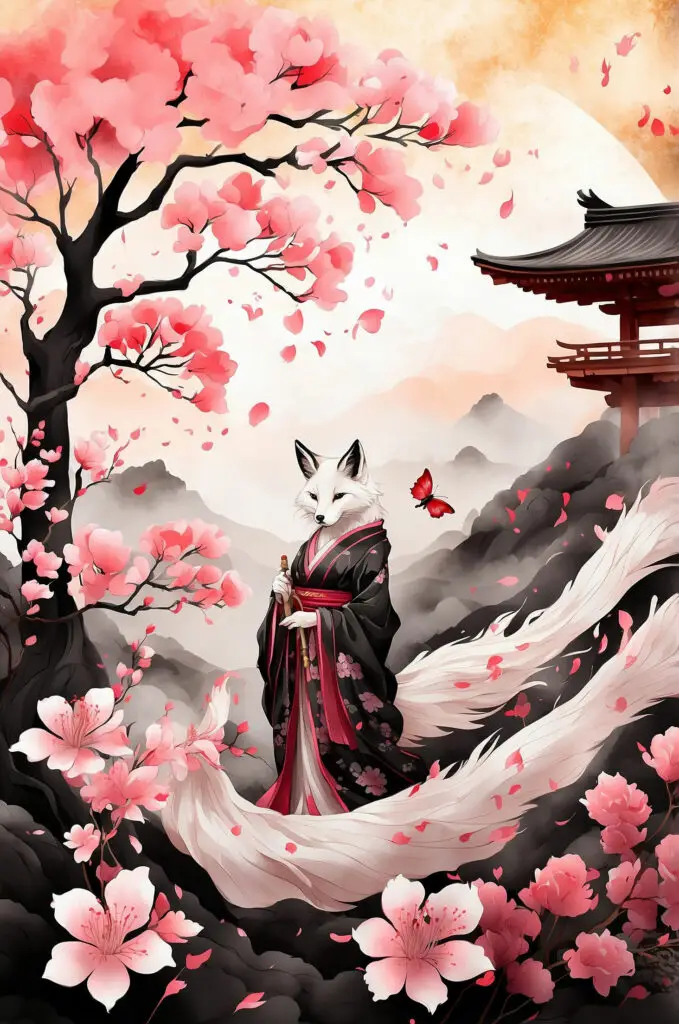
In the tapestry of Japanese folklore, the Kitsune emerges as a figure of mystery and transformation. These mystical foxes are believed to embody the spirit of Inari, the deity of rice and prosperity. With tails that signify their age and wisdom, Kitsune are not merely animals; they are revered as guardians and tricksters, wielding great power in both the physical and spiritual realms. Tales speak of their ability to shapeshift and enthrall the hearts of the unsuspecting. Surrounded by traditional art that captures their elusive essence, we unravel the threads of their heritage, exploring a legacy steeped in enchantment.
The Kitsune, a fox spirit from Japanese lore, is shown as clever and adaptable, a symbol of how skill and change can help you survive and thrive, as seen in the character of Kurama in the anime Yu Yu Hakusho.
Kitsune Magic
The Trickster Archetype
In myth, Kitsune embody the trickster archetype, famous for shape-shifting, bending rules, and pushing social boundaries. As they age, their increasing number of tails symbolizes growing cunning and wizardry, representing new levels of wisdom and the ability to navigate complex social situations. This blend of sharp intellect and mischief, a recurring theme across traditions, highlights their liminal nature.
Hoshi no Tama: The Star Ball
Each kitsune possesses a mystical sphere called the hoshi no tama (star ball), typically represented as a glowing orb located at the tip of the fox's tail. This crystalline treasure serves multiple functions simultaneously: it contains the kitsune's concentrated magical power, functions as its spiritual essence or literal soul, and represents the source of its supernatural abilities. Separation from the hoshi no tama causes the kitsune to weaken dangerously.
Kitsune in Modern Times
Kitsune have become among the most frequently featured yokai in contemporary Japanese popular culture, particularly in anime and manga. The character Kurama (nine-tailed kitsune) in Naruto represents perhaps the most globally recognized kitsune, embodying traditional attributes while adding contemporary superhero elements. The Pokémon Ninetales captures kitsune symbolism in collectible form, introducing millions of international audiences to fox-spirit concepts. Inuyasha features multiple kitsune characters including Tomoe, whose romantic entanglement with human protagonist Inuyasha echoes ancient “fox-wife” narratives.
Contemporary anime frequently explores kitsune duality: Inu x Boku SS presents Soushi Miketsukami as a powerful kitsune whose loyalty transcends his supernatural nature, Kakuriyo: Bed and Breakfast for Spirits features Ginji as a gentle servant despite kitsune power, and The Helpful Fox Senko-san reimagines the fox-spirit as a nurturing caregiver. These varied portrayals demonstrate how kitsune mythology maintains symbolic relevance while adapting to contemporary storytelling needs—sometimes emphasizing traditional trickster elements, sometimes highlighting protective aspects, often exploring romantic possibilities echoing the “fox-wife” archetype.
The Divine Fox Spirit
The kitsune represents the sophistication of Japanese spiritual understanding, a mythical being that embodies paradox, temporal accumulation, moral complexity, and the recognition that transformation fundamentally characterizes consciousness itself. From ancient Buddhist texts to contemporary anime, from rural Inari shrines to international fashion runways, the kitsune persists as a symbol of intelligence, adaptability, and the understanding that appearances deceive while hidden truths possess transformative power.
Unlike mythical creatures defined by fixed symbolic meanings, kitsune maintain their relevance precisely because they resist categorical simplification. A kitsune might be demon or divine messenger, seductress or devoted servant, trickster or trustworthy ally, often simultaneously, embodying contradictory roles. This symbolic flexibility allows kitsune mythology to address contemporary concerns while maintaining continuity with ancient tradition, making them as relevant to modern anime audiences as to medieval farmers seeking Inari’s blessing.
The enduring presence of kitsune across thirteen centuries of Japanese culture demonstrates that humanity’s deepest fascinations concern beings who transcend simplistic morality and embody the possibility of continuous evolution through accumulated experience and adapted consciousness.
Questions
Journey into the world of the Kitsune and their mysteries.
A Kitsune is a fox spirit in Japanese folklore known for its intelligence, magical powers, and shape-shifting abilities. The term “Kitsune” simply means “fox” in Japanese, but in a mythological context, it refers to a yokai (supernatural creature) that accumulates wisdom and power as it ages. These spirits are believed to serve as messengers of Inari, the Shinto deity of rice, prosperity, and agriculture.
Kitsune can be either benevolent or malevolent, depending on their type. Zenko (good foxes) are celestial servants of the deity Inari who bring protection and good luck to humans. In contrast, Yako or Nogitsune (field foxes) are mischievous tricksters that are not associated with Inari; they are known to play pranks, deceive humans, and sometimes cause harm or misfortune.
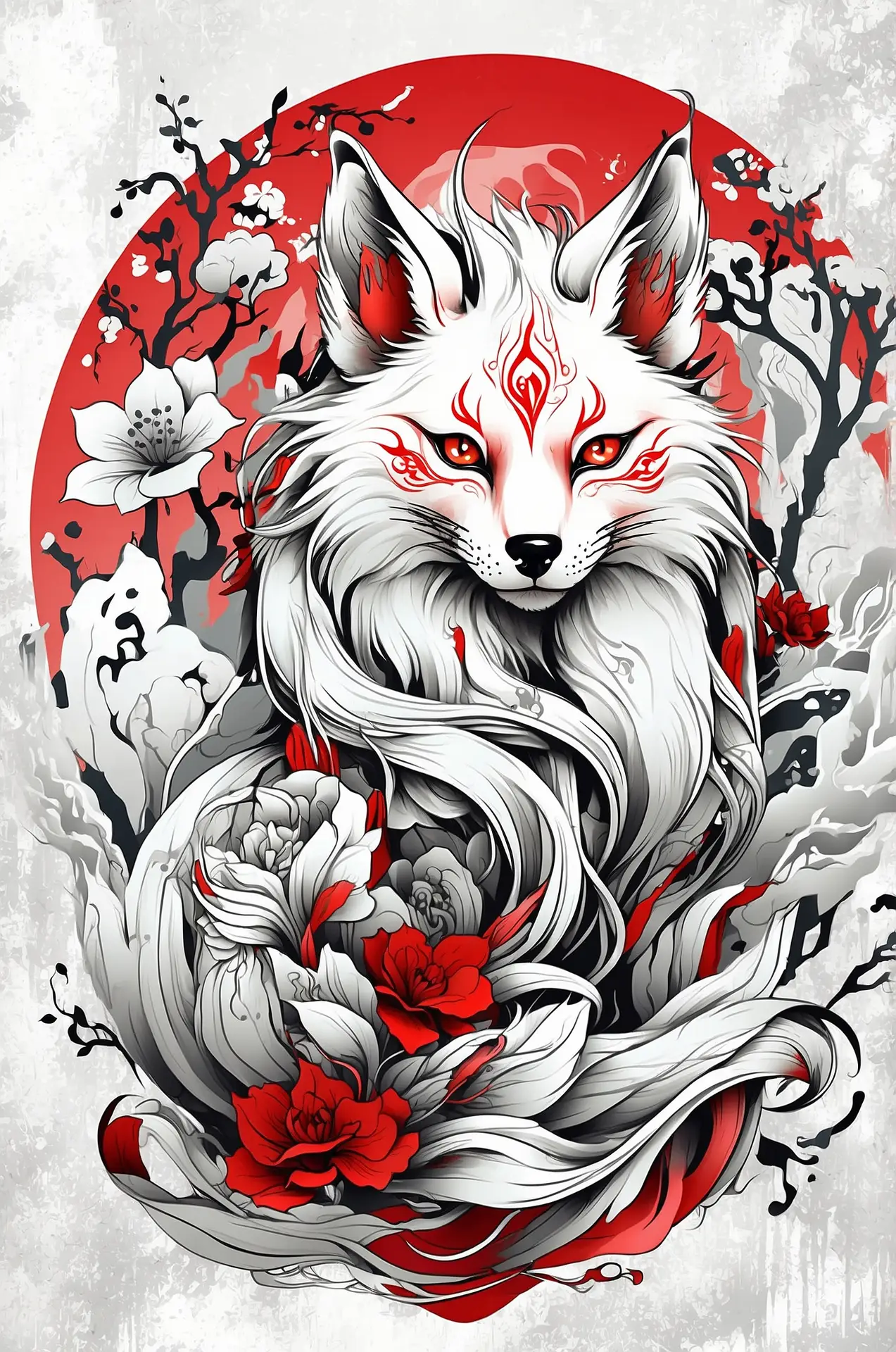
The number of tails on a Kitsune indicates its age, wisdom, and magical power. A Kitsune grows an additional tail approximately every 100 years. When a Kitsune grows its ninth tail (the maximum number), it transforms into a Kyubi no Kitsune (nine-tailed fox), gaining immense power, infinite wisdom, and fur that turns gold or white.
Kitsunetsuki refers to the state of being possessed by a fox spirit. Traditional symptoms include a sudden change in personality, speaking in strange voices or languages the victim doesn’t know, and physical cravings for foods loved by foxes, such as fried tofu (aburaage). In folklore, victims might also display fox-like behaviors or facial expressions. Historically, this was often used to explain mental illnesses before modern medicine.
Kitsune are exceptionally long-lived and can become virtually immortal. A normal fox becomes a supernatural Kitsune after living for 100 years, at which point it gains the ability to shapeshift into a human. As they continue to age and gain tails (one per century), their lifespan extends indefinitely. A nine-tailed fox (Kyubi) is considered a divine being with a lifespan that transcends normal mortality.
Yes, shapeshifting is one of a Kitsune’s primary magical abilities. They can transform into human forms, most commonly appearing as beautiful young women, elderly men, or young children. They typically gain this ability after reaching 100 years of age. Kitsune often use this power to trick humans, though in many legends, they also assume human form to marry and live faithfully with human partners.