The Phoenix
The Legend of the Phoenix Awaits
The phoenix, an emblem of rebirth and immortality, weaves through the tapestry of countless civilizations. From the fiery narratives of ancient Egypt to the whispers of the far east, the story sings of a magnificent bird rising anew from its ashes. It embodies renewal, transformation, and the cycles of life. As you journey through its rich history, witness how diverse cultures have embraced this enigmatic creature, each adding layers of meaning and wonder.
Awaken the Myths
Genesis and Origins
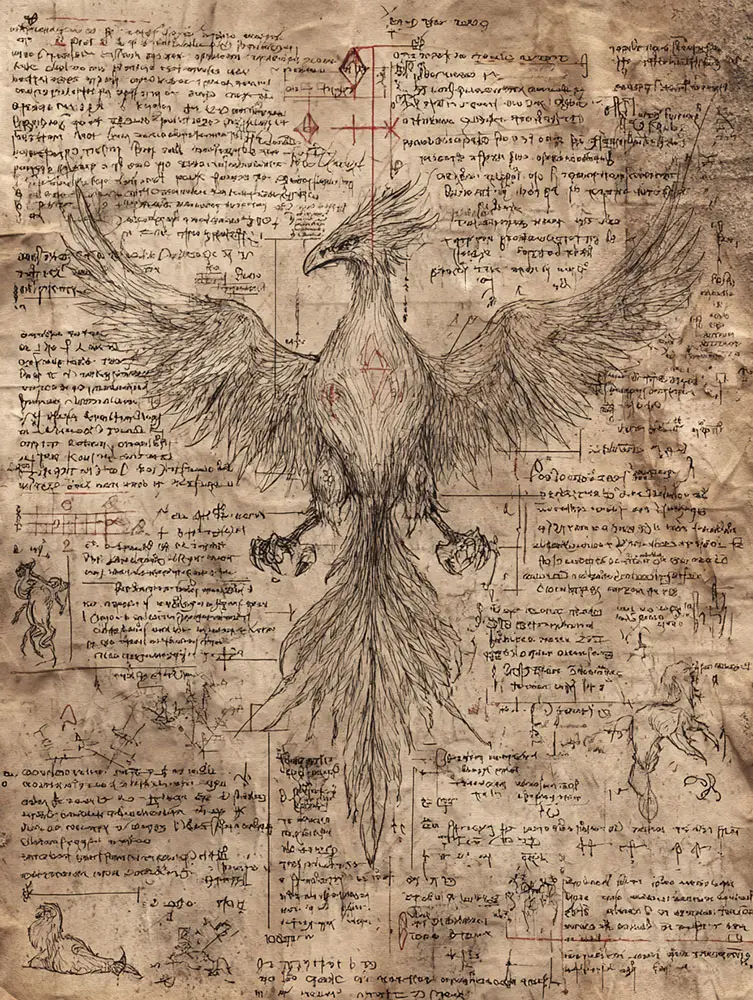
The Phoenix emerges from humanity’s most ancient desires to understand death, renewal, and the eternal cycles of existence. The earliest known version of this magnificent firebird traces back to ancient Egypt, where the Bennu bird served as a powerful symbol of solar rebirth and creation. According to Egyptian mythology, Bennu arose from the primordial waters of Nun and perched upon the sacred Benben stone, marking the very beginning of creation itself. When Bennu let out its first cry, it set time itself in motion—the voice that gave birth to the cycles of days, seasons, and the eternal rhythm of death and rebirth.
The Bennu was intimately connected to Ra, the sun god, embodying the daily cycle of solar death and resurrection. Each dawn represented the Phoenix’s rebirth, as the sun emerged victorious over the darkness of night. This solar connection established the foundational symbolism that would echo through millennia: the Phoenix as a creature that could not be destroyed, only transformed.
The Greeks adopted and transformed these Egyptian traditions, developing their own version of the Phoenix around the 5th century BCE. The Greek historian Herodotus described a magnificent bird that lived for 500 years before creating a nest of fragrant herbs and spices, setting itself ablaze, and rising anew from its own ashes. This Greek interpretation emphasized the dramatic cycle of self-immolation and resurrection, establishing the Phoenix as the ultimate symbol of triumph over mortality.
From ancient Egypt to modern culture, the Phoenix endures as a symbol of transformation, showing that every end can spark a new beginning.
Rebirth Through Fire
In every tale, the phoenix rises anew, a symbol of hope and transformation, embracing the cycle of life.
Renewal of the Spirit
With each dawn, the phoenix illustrates the enduring power of renewal, guiding us to embrace change.
Symbol of Immortality
The phoenix’s flame reflects the eternal spirit, reminding us that life transcends the physical.
Legends Across Different Cultures
Egyptian Bennu: The Solar Phoenix
The Bennu represents the most ancient form of Phoenix mythology. Depicted as a heron with brilliant plumage, often crowned with two erect feathers, the Bennu was said to live on the sacred Persea tree in Heliopolis. According to legend, every 500 years, the Bennu would fly to the temple of Ra, build a nest of cinnamon and spices, and consume itself in flames while singing a song of rare beauty. From its ashes, a new Bennu would emerge, carrying the remains of its predecessor to the sacred altar.
Persian Simurgh: The Benevolent Guardian
In Persian mythology, the Simurgh shares characteristics with the Phoenix while maintaining distinct qualities. This benevolent bird, often described with peacock-like features, the head of a dog, and lion’s claws, possessed immense wisdom and healing powers. Unlike the fire-centered Western Phoenix, the Simurgh emphasized nurturing and protection, bringing rain and fertility to the land. The Simurgh lived for thousands of years and served as a divine messenger, representing the protective aspects of renewal rather than the dramatic destruction and rebirth.
Greek Phoenix: Fire and Immortality
The Greek Phoenix crystallized the concept of dramatic rebirth through fire. Living in Arabia for centuries, this golden-red bird would sense the approach of death and construct an elaborate pyre. The Phoenix would then ignite itself through the beating of its wings, perishing in magnificent flames only to rise again as a young, powerful creature. The Greeks associated the Phoenix with Apollo, the god of light and the sun, reinforcing its connection to celestial cycles and divine power
Chinese Fenghuang: Harmony and Imperial Virtue
The Chinese Fenghuang represents perhaps the most complex evolution of Phoenix mythology. It embodies harmony, virtue, and cosmic balance.
The Fenghuang’s body symbolizes celestial elements: the head represents the sky, eyes are the sun, the back is the moon, wings embody wind, feet represent earth, and the tail symbolizes planets. Its five fundamental colors—black, white, red, yellow, and green—correspond to Confucian virtues: benevolence, honesty, knowledge, faithfulness, and proper behavior. The Fenghuang appears only in times of peace and prosperity, serving as a divine indicator of virtuous rule.
The Awakening
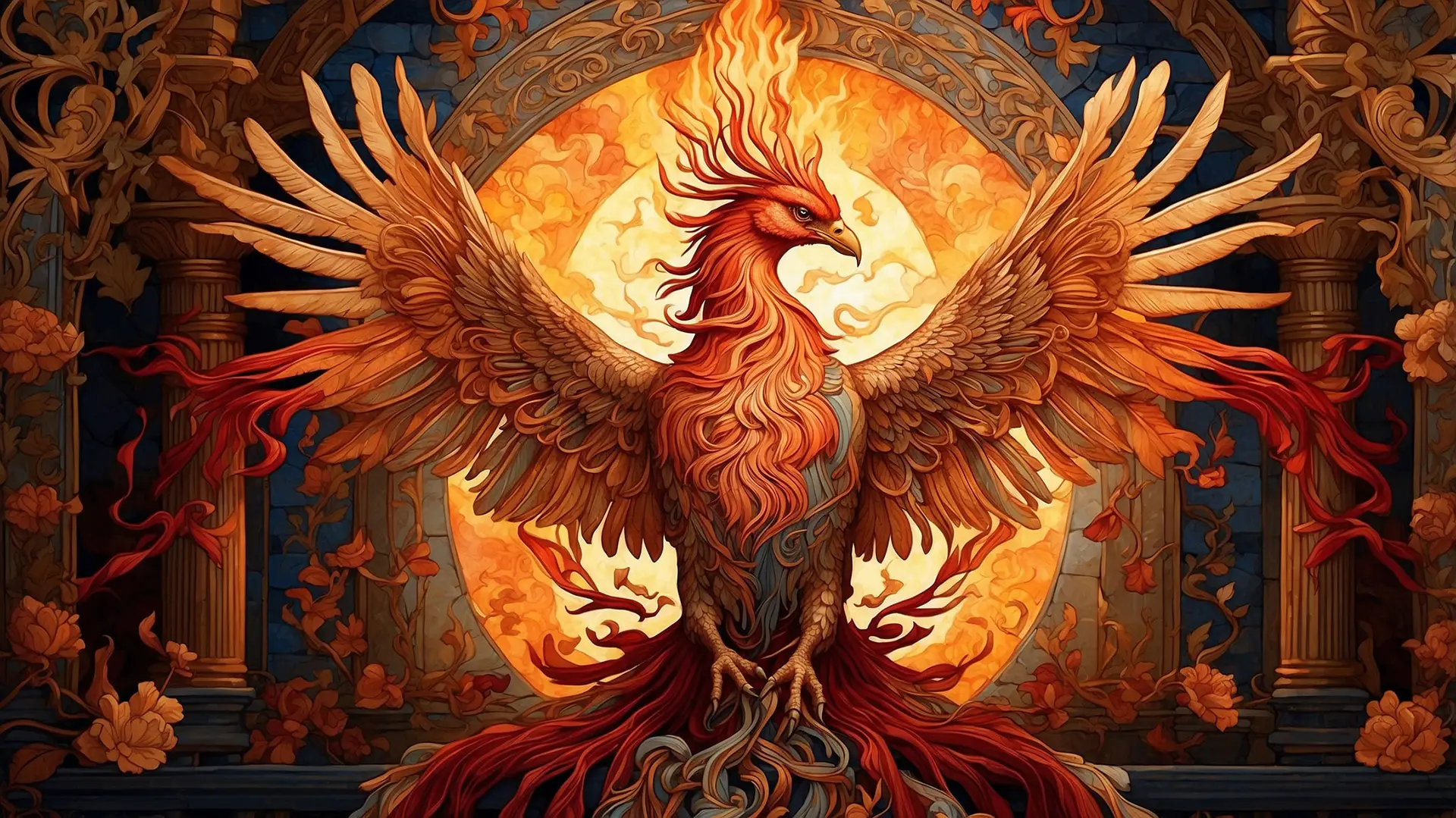
In ancient tales, the phoenix rises from ashes, embodying rebirth and transformation. This legend evokes a powerful image of hope.
The Eternal Flame
Witness the stories of fire and light, where the phoenix symbolizes resilience and the eternal nature of life. Each tale holds a spark of wisdom.
Legends Unveiled
Explore a tapestry of legends, where the myth of the phoenix intertwines with the human experience. Let each story ignite your imagination.
Dragons in modern culture
Modern literature continues to draw upon Phoenix symbolism for themes of personal transformation and renewal. Shakespeare incorporated Phoenix imagery in works like “The Phoenix and the Turtle,” using the mythical bird to explore themes of perfect love and unity. Contemporary authors use Phoenix metaphors to address recovery from trauma, societal renewal after crisis, and personal reinvention.
The Phoenix appears prominently in memorials and monuments, particularly those commemorating recovery from disasters. Manchester United featured a Phoenix on their shirts following the Munich Air Crash, symbolizing the team’s rise from tragedy. Venice’s La Fenice opera house, rebuilt twice after fires, embodies the Phoenix’s literal resurrection.
Phoenix in Geek Culture
Harry Potter’s Fawkes: The Healing Phoenix
Fawkes represents one of the most beloved modern interpretations of the Phoenix. As Albus Dumbledore’s companion in J.K. Rowling’s Harry Potter series, Fawkes embodies traditional Phoenix qualities while adding unique magical properties. His tears possess healing powers, his songs provide protection, and his feathers form the core of powerful wands.
Fawkes appears prominently in “Harry Potter and the Chamber of Secrets,” where he helps Harry defeat the Basilisk by blinding it and healing Harry’s wounds. His ability to carry heavy loads and teleport adds practical magic to the mythological foundation. The Order of the Phoenix takes its name from both Fawkes and the symbolic meaning of rising from ashes to fight against dark forces.
Final Fantasy’s Phoenix: Resurrection and Power
The Phoenix summon has been a recurring element in the Final Fantasy series for over three decades. Making its debut in Final Fantasy V, Phoenix serves various roles across different games—sometimes as a summon, sometimes as an item, and occasionally as both. The Phoenix’s primary function involves reviving fallen party members and restoring them to full health, embodying the mythological bird’s power over death.
In Final Fantasy VII, Phoenix appears through items like Phoenix Down and Phoenix Pinion, maintaining its connection to resurrection while adding strategic gameplay elements. Final Fantasy VIII features Phoenix as an unpredictable Guardian Force that appears when the party faces defeat, dramatically turning the tide of battle. Final Fantasy XVI elevates Phoenix to central narrative importance as one of the primary Eikons, demonstrating the series’ evolution from gameplay mechanic to core story element.
Anime and Manga: Osamu Tezuka’s Phoenix
Osamu Tezuka’s “Phoenix” manga represents one of the most sophisticated explorations of Phoenix mythology in popular culture. Running from 1954 until Tezuka’s death in 1989, this unfinished masterpiece weaves stories of reincarnation across time, alternating between ancient past and distant future. Each story explores the search for immortality through the Phoenix’s blood, ultimately revealing immortality as either unobtainable or a terrible curse.
Tezuka’s Phoenix resembles the Chinese Fenghuang and serves as a symbol of Buddhist reincarnation rather than Western resurrection concepts. The series experimental visual design and philosophical depth have earned critical acclaim, with Time Magazine calling it “a singular masterpiece of world fiction”. The titular Phoenix has become an icon of manga, featured prominently in the Kyoto International Manga Museum.
Gaming and Interactive Media
Phoenix imagery permeates modern gaming culture beyond Final Fantasy. World of Warcraft features Phoenix-themed mounts and pets, particularly in content related to fire and rebirth themes. Trading card games frequently feature Phoenix cards that return from the discard pile, mechanically representing the creature’s resurrection abilities.
Indie games often use Phoenix symbolism for player resurrection mechanics, transforming the mythological concept into interactive gameplay. The Phoenix’s cycle of death and rebirth translates naturally into video game mechanics, where failure and retry are fundamental elements