Introduction: Why Do Terrifying Creatures Haunt Every Culture?
Across continents and centuries, humanity has conjured up creatures that chill the spine: monsters that stalk the night, spirits that bring ruin, and beasts whose hunger is never sated. These terrifying mythical creatures are more than just stories—they are echoes of our primal fears, guardians at the edges of the known, and sometimes, cautionary tales to keep us from danger.
This guide delves into the most fearsome beings from global folklore, weaving together history, legend, and psychological insight. Read on, if you dare and explore the DNA of terror itself.
Table: Terrifying Mythical Creatures at a Glance
| Name | Region/Culture | Defining Horror | Iconic Form |
|---|---|---|---|
| Hydra | Greek | Poison, many heads | Serpentine monster |
| Wendigo | Algonquian (Native Am.) | Cannibal spirit | Gaunt, antlered |
| Jorogumo | Japanese | Spider seductress | Woman/spider hybrid |
| Draugr | Norse | Undead revenant | Rotting giant corpse |
| Chupacabra | Latin American | Livestock vampire | Reptilian beast |
| Lamashtu | Mesopotamian | Demon mother | Hybrid demoness |
| Banshee | Irish/Celtic | Wailing death omen | Pale woman/ghost |
| Nuckelavee | Scottish | Skinless horse-demon | Horse/human hybrid |
| Penanggalan | Malay | Flying vampire head | Disembodied head |
| Kraken | Norse/Scandinavian | Sea monster | Giant squid |
| Jersey Devil | American (NJ) | Winged screecher | Bat-goat chimera |
| Baba Yaga | Slavic | Child-eating witch | Old hag |
1. The Hydra: Greek Serpentine Terror

The Lernaean Hydra, born from the Greek underworld, is a serpentine monster with multiple venomous heads—cut one off, and two more grow in its place. Its toxic breath and blood could kill with a touch. Hercules’ famous labor to slay the Hydra required both strength and cunning, using fire to sear each stump, halting the monster’s regeneration. The Hydra embodies the fear that evil, once revealed, can multiply if not confronted wisely.
2. Wendigo: The Cannibal Spirit of the Frozen North

From Algonquian folklore comes the Wendigo—a malevolent spirit of insatiable hunger. It possesses those who resort to cannibalism, driving them to commit further horrors. Described as towering, emaciated, and icy to the touch, the Wendigo is a metaphor for greed and the loss of humanity in the face of desperation. Modern psychology even uses “Wendigo Psychosis” as a term for cannibalistic compulsion.
3. Jorogumo: The Deadly Spider Seductress (Japan)

The Jorogumo, or “Binding Bride,” is a shape-shifting spider from Japanese legend. Upon reaching 400 years of age, the spider gains the power to transform into an alluring woman who seduces and ensnares men—literally. Her victims are paralyzed by her venom and slowly consumed. The Jorogumo’s tale warns of deceptive beauty and the peril within the familiar.
4. Draugr: Norse Revenants of the Grave
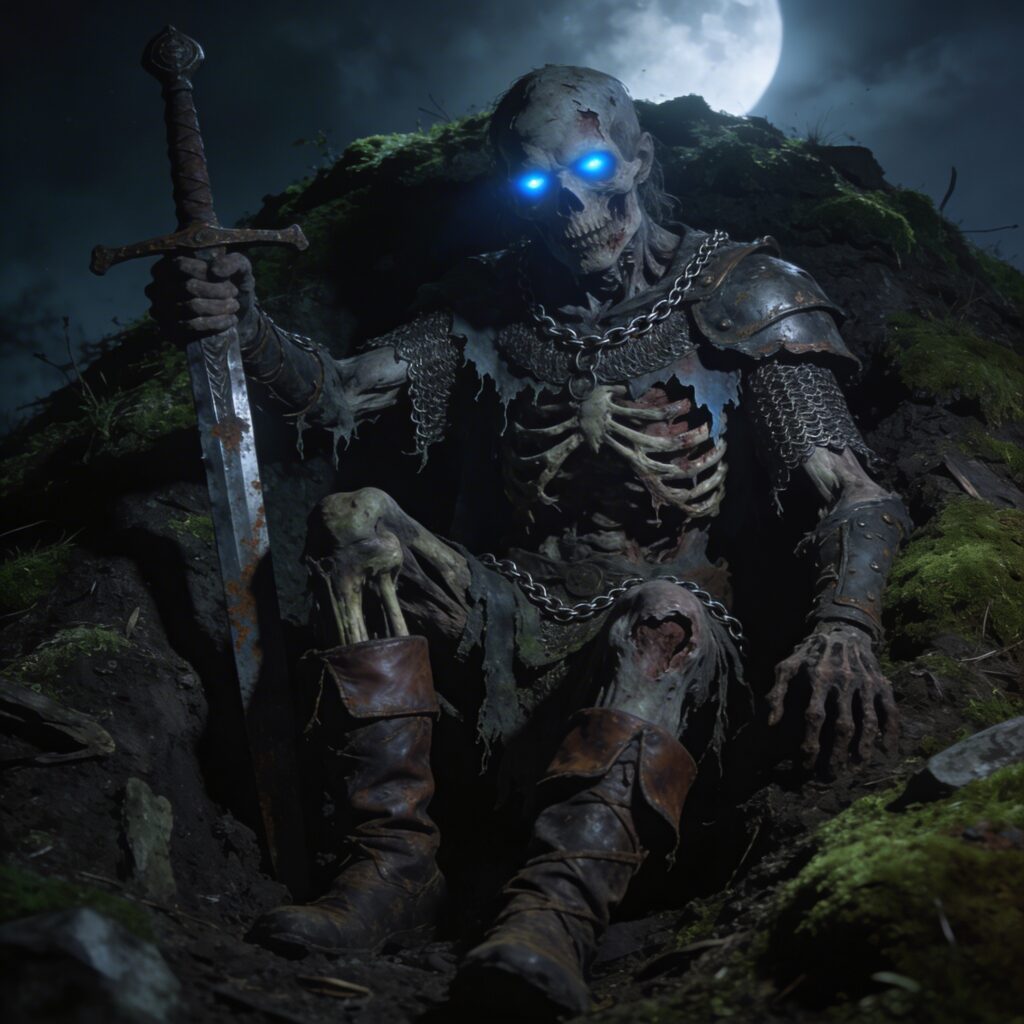
In Norse mythology, the Draugr are undead warriors, swollen and blue-black, cursed to walk after death. They guard treasure, haunt the living, and grow in size at will. Their touch brings madness and death, and those they kill may rise as Draugr themselves. Only decapitation and burning can end their terror. The Draugr represents the fear that some wrongs never sleep.
5. Chupacabra: Modern Vampire of the Americas

A recent addition to the bestiary, the Chupacabra (“goat-sucker”) is blamed for mysterious livestock deaths across Latin America. Described as reptilian, hairless, with spines or quills, it drains victims of blood through small incisions. Is it a cryptid, alien, or mutated predator? The Chupacabra thrives on modern fear—the unknown lurking just outside the light.
6. Lamashtu: Mesopotamian Mother of Demons

Lamashtu, from ancient Mesopotamia, is a demoness known for causing death and disease, especially to mothers and infants. With a lioness or jackal head, taloned feet, and a snake’s tail, she drinks blood, spreads nightmares, and is the origin of many later demon legends. Amulets were worn to protect against her wrath.
7. Banshee: Ireland’s Harbinger of Death

The Banshee is a female spirit from Irish and Scottish folklore whose piercing wail foretells imminent death. Sometimes beautiful, sometimes a haggard crone, her scream is so haunting it can drive listeners mad. The Banshee is both a warning and a symbol of fate, inescapable, mournful, and shrouded in mist.
8. Nuckelavee: The Skinless Horror of Orkney
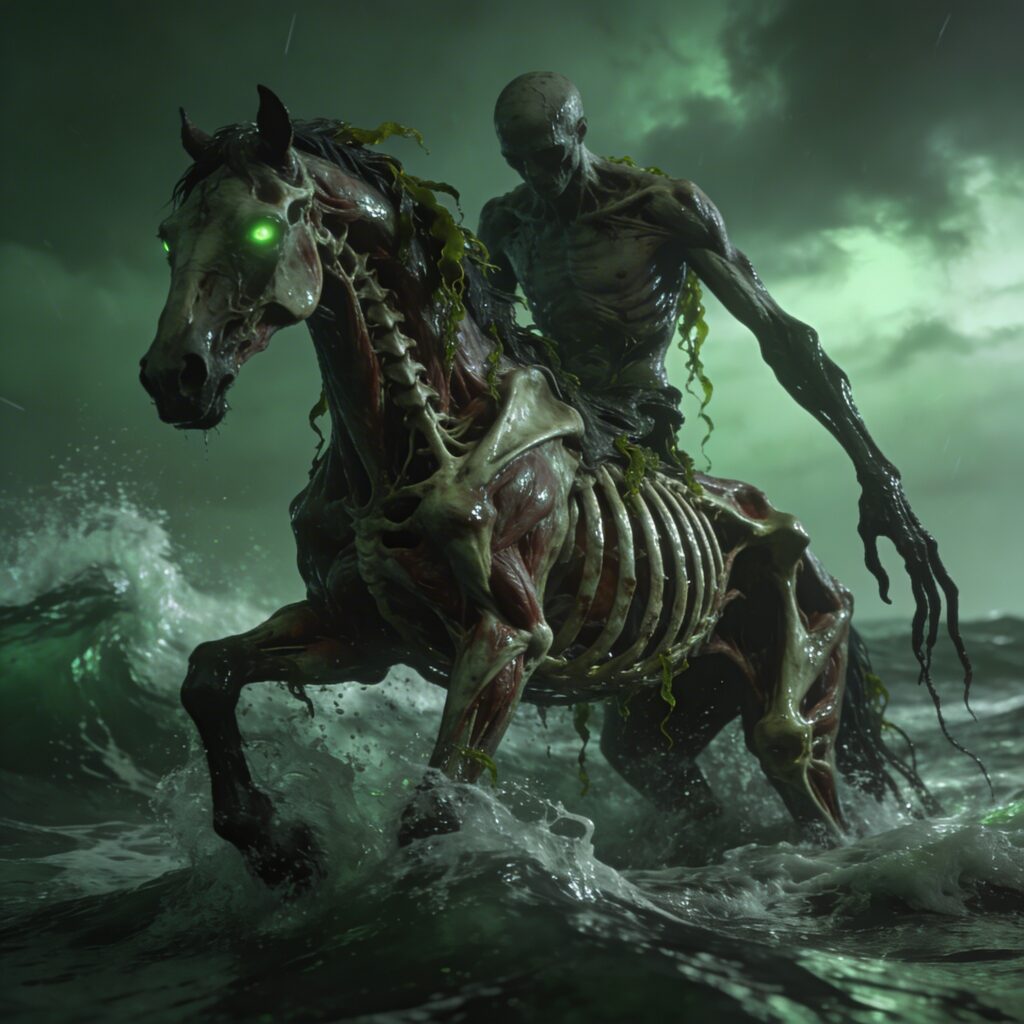
Orkney legend tells of the Nuckelavee, a skinless horse-demon with a man’s body growing from its back. Its toxic breath scorches crops and spreads disease; its mere presence brings death. Only fresh water can stop its rampage. The Nuckelavee is terror made flesh, a reminder of nature’s uncontrollable wrath.
9. Penanggalan: The Floating Vampire Head (Malay)

In Malay folklore, the Penanggalan is a woman cursed for forbidden knowledge or broken vows. By day, she appears normal; by night, her head detaches and flies, entrails dangling, to suck the blood of the vulnerable. The smell of vinegar reveals her by day. Her legend is a chilling tale of transformation and hidden danger.
10. Kraken: The Ocean’s Leviathan

The Kraken, from Norse and Scandinavian legend, is a colossal sea monster, often described as a squid or octopus, that drags entire ships to the depths. Sightings may have been inspired by giant squids, but the Kraken’s myth endures as a symbol of the untamable forces of the deep.
11. Jersey Devil: America’s Winged Nightmare

The Jersey Devil haunts the Pine Barrens of New Jersey, a winged, hoofed, and horned monster said to be the cursed 13th child of a colonial woman. Its piercing screams and flapping wings have terrified generations. The legend blends folklore, hysteria, and America’s own brand of monster myth.
12. Baba Yaga: The Slavic Witch

Baba Yaga is a witch from Slavic folklore, living in a hut atop chicken legs. She is both a figure of terror and ambiguous wisdom, a child-eater who tests the courage and wit of heroes. Her legend bridges the line between fear and respect for the supernatural.
FAQ: Terrifying Creatures in Myth and Culture
Q1: Are these creatures based on real events or animals?
Some have roots in rare animal sightings (giant squids, rabid wolves), while others are wholly symbolic or psychological in origin.
Q2: Which is the most terrifying mythical creature?
It depends on your fears! The Hydra, Wendigo, Draugr, and Nuckelavee are often cited as the most horrifying.
Q3: Can I explore more about each monster?
Yes! Visit the Codex of the Beasts for an ever-growing encyclopedia of legendary entities.
Q4: Why do monsters appear so often in modern media?
They reflect our timeless anxieties and allow us to safely explore fear. From games to films, these legends remain endlessly adaptable.
Conclusion: The Enduring Power of Terror
From the ancient Hydra to the modern Chupacabra, terrifying mythical creatures remain a vital part of human storytelling. They connect us to the unknown, teach caution, and keep the enchantment of myth alive.
Continue your journey into the shadows: explore, imagine, and perhaps, beware what stirs in the night.