Table of Contents
- Definition & Overview
- Core Concepts
- How Draconology Works
- Types of Dragons & Draconology
- Best Practices for Draconological Study
- Advanced Strategies
- Tools & Resources
- Frequently Asked Questions
Definition & Overview
Draconology is the scholarly study and research of dragons and related creatures, primarily within the genus Draconidae. It spans the investigation of their historical documentation, biological characteristics, cultural significance, paleontological remains, and the taxonomy of both extinct and extant species. Unlike pure mythology, draconology applies scientific, archaeological, and literary methods to uncover, catalog, and analyze dragon lore and evidence.
What it is:
- A multidisciplinary field combining history, paleontology, biology, and folklore to study dragons as if they were real or as legendary creatures rooted in ancient records.
What it isn’t:
- Mere fantasy storytelling or speculative fiction. Draconology seeks verifiable evidence within myths, artifacts, and historical documents.
Why it matters:
- Dragons are central figures in mythologies worldwide, influencing art, literature, and cultural identity. Systematic study enables deeper understanding of how legends shape societies and how mythical creatures might have been perceived as real.
Brief history:
- Earliest records date back over three millennia (e.g., the Amarean papyrus, the ‘Dracoliber’). Catastrophic events like the ‘Scalding’ of Draconology led to the loss of key archives. Modern draconology has revived interest through fossil findings and renewed scholarly activity.
What you will learn:
- Fundamentals of draconology, dragon taxonomy, scientific methods, best practices, advanced research, resource recommendations, FAQs, and visual learning aids.
Core Concepts
1. Dragon Taxonomy & Classification
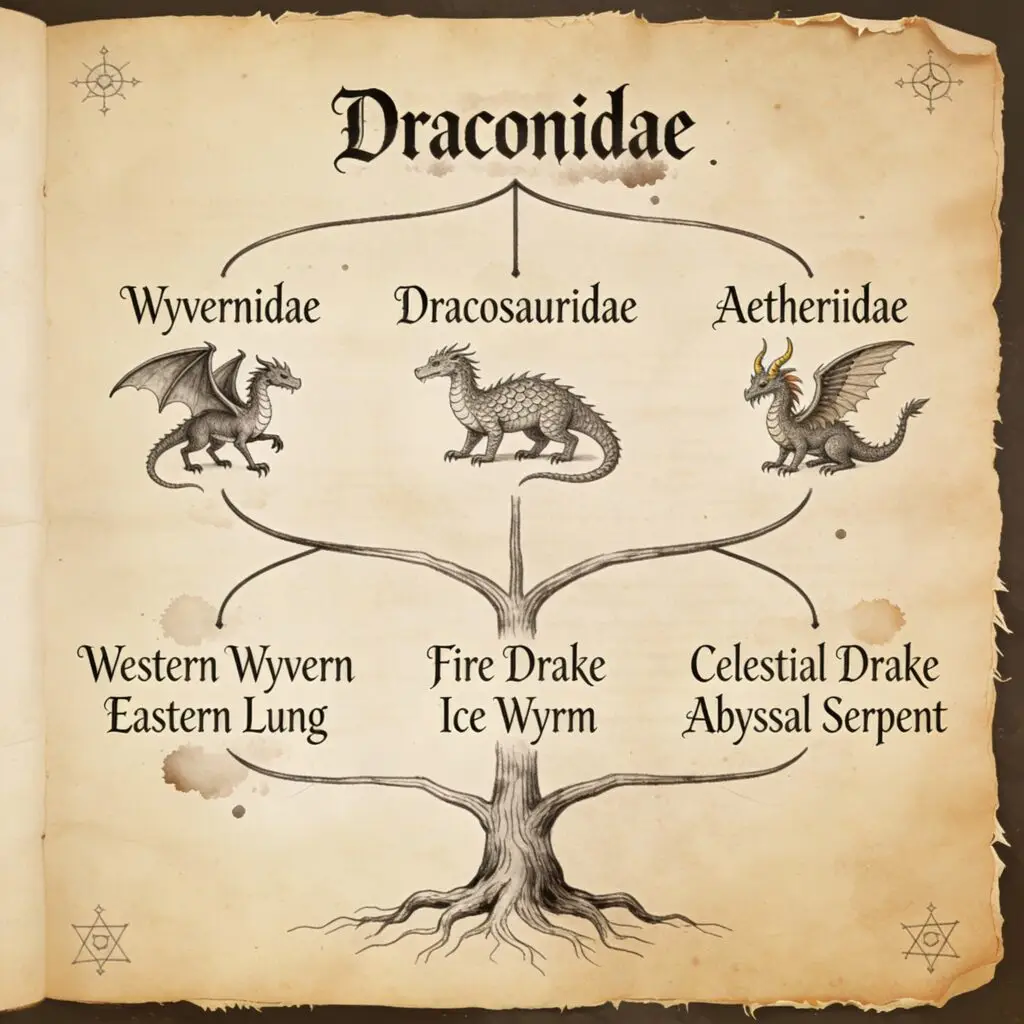
Draconology organizes dragons into taxonomic families and subgroups based on morphology, magical attributes, and historical records. Key branches include Draconis (true dragons, magical), Draconomorphs (lesser dragons, non-magical), and extinct mega-genera.
- Example: The Lindwurm is classified as a true dragon due to magical prowess and historical documentation.
- Why it matters: Classification aids in scientific cataloging and comparative research.
2. Extant vs. Extinct Species
Dragons are categorized based on their existence in the modern era.
- Extant: Wyverns, Drakes, Lindwurms (some populations survive)
- Extinct: Emperor Dragons, Spirit Dragons, Sea Dragons, Volantean Dragons
- Example: The Nubedactylus (Common Wyvern) is a surviving species, while the Quetzal (Volantean Dragon) is extinct.
3. Historical Documentation
Ancient records (papyrus, carvings, poetry, and military reports) form the backbone of draconological evidence.
- Example: The ‘Dracoliber’ catalogs the Lindwurm and other draconid animals.
- Misconception: All dragon tales are fictional; many are rooted in historical witness accounts.
4. Biological & Magical Attributes
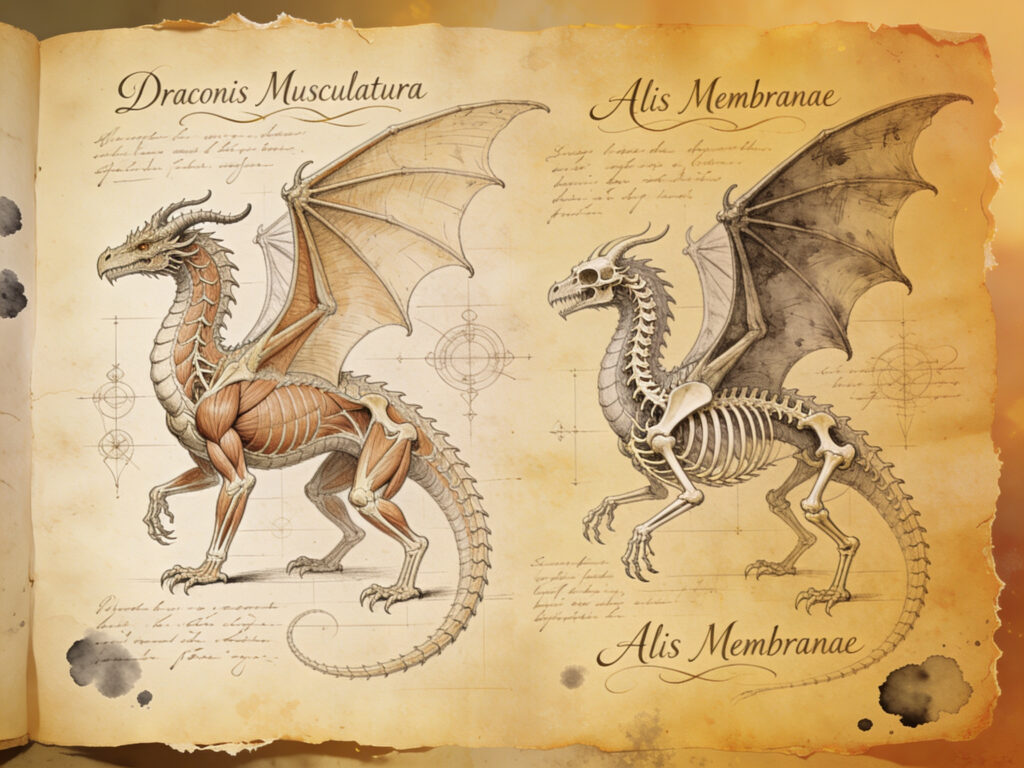
True dragons exhibit magical abilities (vitoric arts), advanced intelligence, and unique skeletal structures. Lesser dragons are biologically powerful but lack supernatural properties.
- Example: Emperor Dragons practice elemental arts like pyrokinesis.
5. Paleontological Research
Fossilized remains, skeletal fragments, and sediment impressions offer scientific clues. Modern draconologists conduct digs and comparative anatomy studies.
- Example: Fossilized bones with vitoric residue suggest magical activity.
6. Cultural Impact
Dragons are central to folklore, art, and societal rituals. Understanding their mythic role is essential for comprehending ancient cultures.
How Draconology Works
Step-by-Step Process:
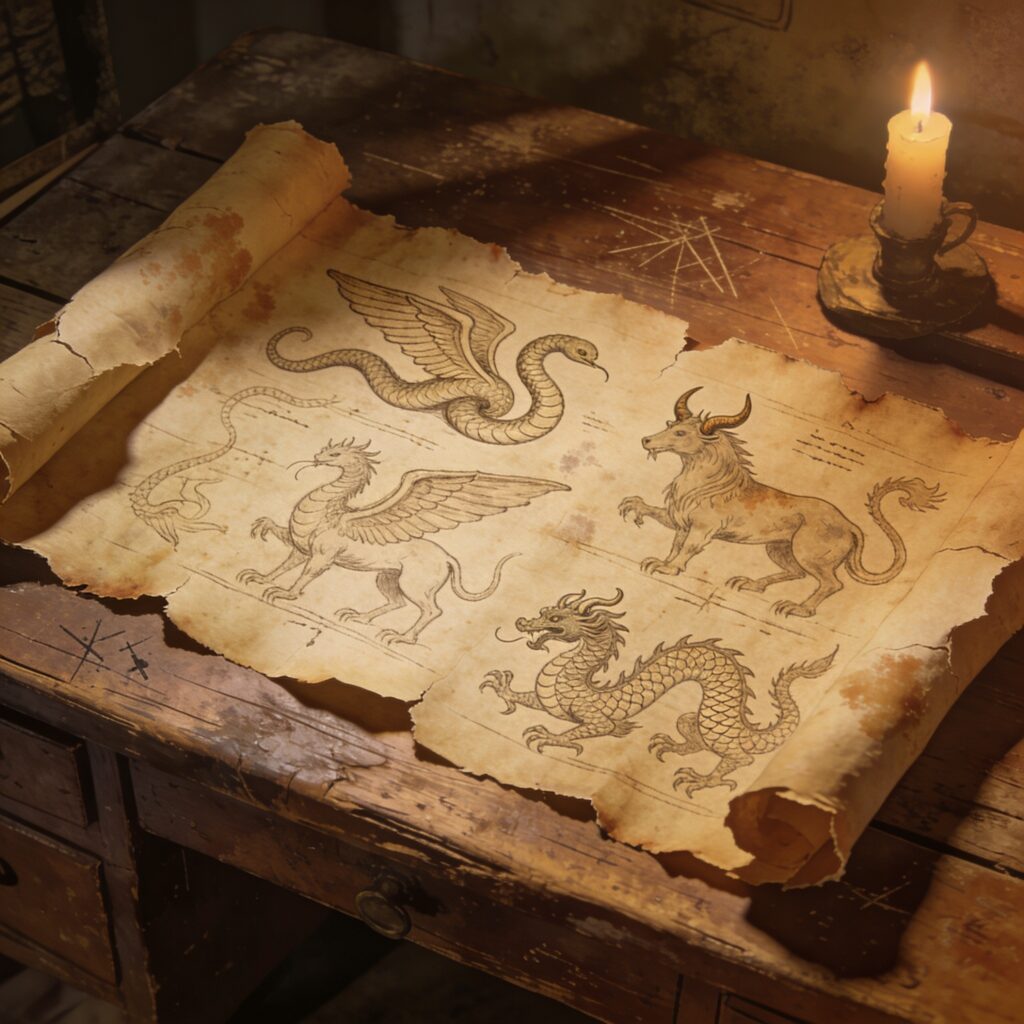
- Historical Survey
- Collect ancient texts, papyri, poems, and artifacts.
- Taxonomic Analysis
- Classify dragons by family/genus/species.
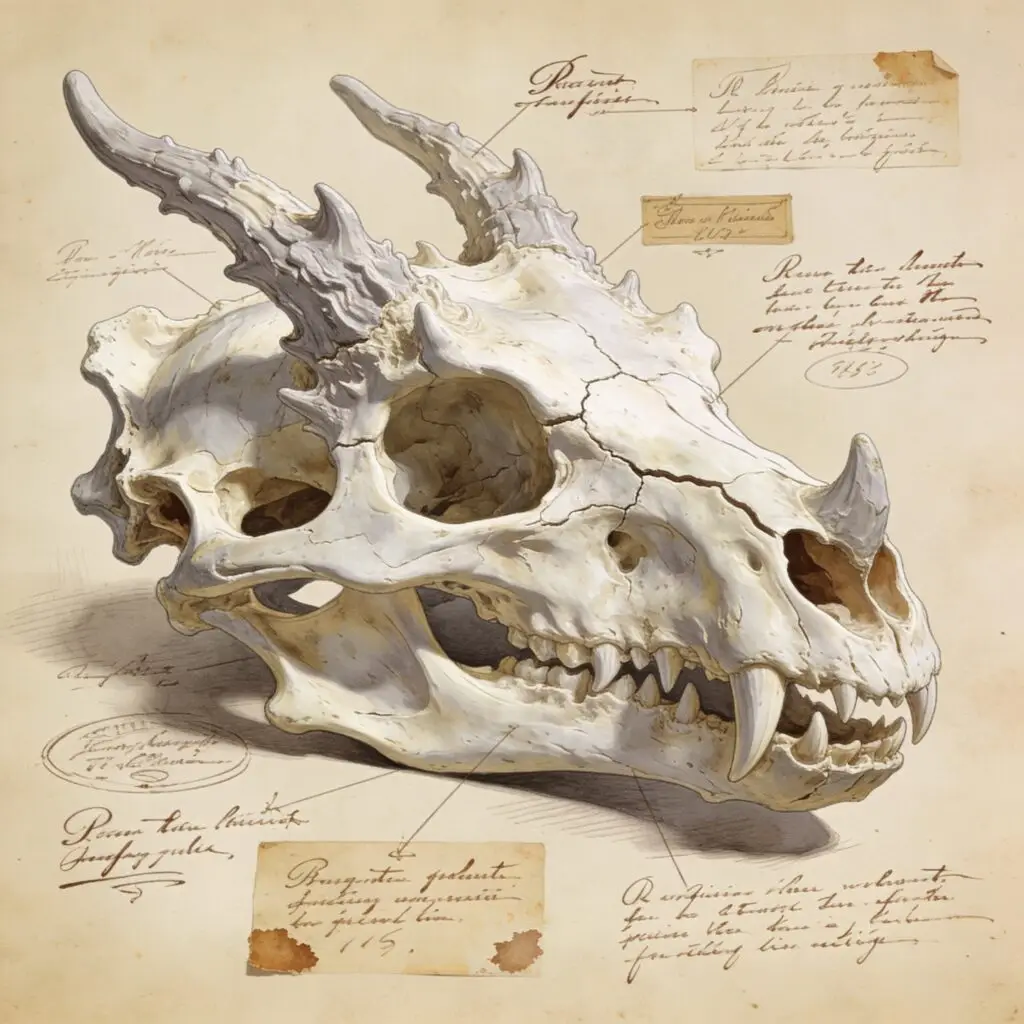
- Biological Examination
- Analyze remains, bones, and magical residue.
- Comparative Study
- Compare historical records with archaeological finds.
- Cataloging & Documentation
- Record findings in digital and physical archives.
- Interpretation & Publication
- Synthesize evidence into scholarly articles, encyclopedia entries, and public guides.
Before/after scenario:
- Before: Fragmented myths, unverified stories.
- After: Organized taxonomy, scientific catalog, visual diagrams.
Types of Dragons & Draconology
| Type | Best For | Complexity | Magical Attributes | Example Species |
|---|---|---|---|---|
| True Dragons | Advanced study | High | Yes | Lindwurm, Emperor Dragon |
| Lesser Dragons | Beginners | Medium | No or limited | Wyvern, Drake, Wyrm |
| Extinct Mega-genera | Historical focus | High | Yes | Spirit Dragon, Sea Dragon |
True Dragons (Draconis)
- Possess magical powers, high intelligence
- Example: Lindwurm, Emperor Dragon
Lesser Dragons (Draconomorphs)
- Physical prowess, limited/no magic
- Example: Wyvern, Drake, Wyrm
Extinct Mega-genera
- Functionally extinct, power and legend
- Example: Spirit Dragons, Sea Dragons, Volantean Dragons
Best Practices for Draconological Study
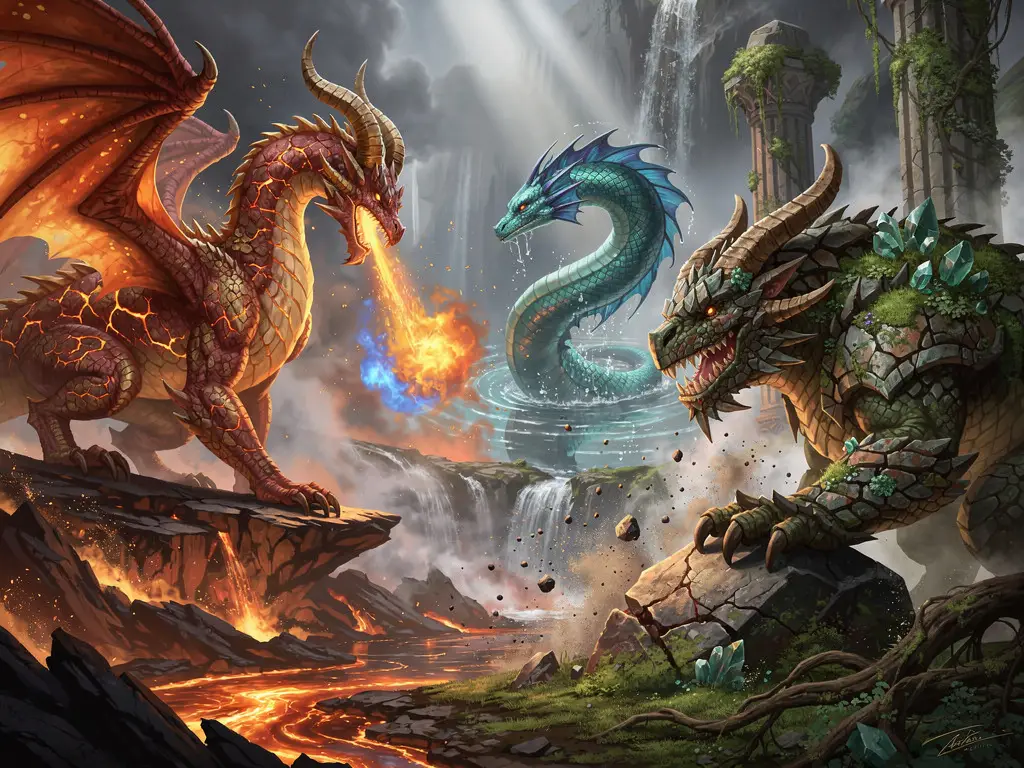
- Start with Primary Sources
- Seek original papyri, carvings, and poems for evidence.
- Common mistake: Relying on secondary myths without source verification.
- Apply Scientific Taxonomy
- Use standardized classification to organize findings.
- Document Physical Evidence
- Record fossil dig sites, skeletal remains, and magical residue.
- Compare Across Disciplines
- Integrate historical, biological, and folkloric data.
- Engage with Communities
- Collaborate with other scholars and enthusiasts.
- Maintain Skepticism & Rigor
- Question assumptions and seek reproducible evidence.
- Publish and Share Findings
- Make research accessible via guides, journals, and multimedia.
- Avoid Over-Interpretation
- Distinguish between legend and evidence.
Advanced Strategies
- Optimization: Digitize archives, create interactive maps of fossil sites.
- Scaling: Expand cataloging to global dragon myths and paleontological records.
- Integration: Cross-reference with other mythical creature studies (see Codex of the Beasts).
- Cutting-edge: Use AI to analyze historical texts for hidden references.
- Pitfalls: Beware confirmation bias and misattribution of evidence.
- Trends: Increasing interest in interdisciplinary research and digital visualization.
Tools & Resources
Essential Tools
- Digital Archives: For cataloging finds and documentation.
- Taxonomic Databases: Dragon family trees and classification tools.
- Paleontological Kits: For fossil excavation.
- Visual Mapping Software: To track dig sites and artifact locations.
Learning Resources
- Books: “The Codex of the Beasts” (see Codex of the Beasts)
- Online Courses: Mythical creature studies, paleontology basics
- Certifications: Historical research, taxonomy, magical studies
Further Reading
Frequently Asked Questions
Q1: What distinguishes a true dragon from a lesser dragon? A true dragon possesses magical properties and higher intelligence; lesser dragons are powerful but lack magic.
Q2: Are any dragons believed to survive today? Yes, some extant species like the Wyvern and Drake are reported in modern draconological records.
Q3: How do draconologists verify evidence? Through primary historical records, fossil analysis, and comparative taxonomy.
Q4: Can draconology be applied to other mythical creatures? Yes, similar methods are used for creatures like griffins, hydras, and unicorns (see Codex of the Beasts).
Q5: What are the main threats to dragon knowledge preservation? Loss of archives, misinterpretation, and skepticism.
Q6: How do magical attributes get documented? Through descriptions in ancient texts and analysis of vitoric residue on remains.
Q7: Can anyone become a draconologist? Yes, with dedication to research, taxonomy, and interdisciplinary study.
Q8: What are the most famous extinct dragons? Emperor Dragons, Spirit Dragons, Sea Dragons, and Volantean Dragons.
Q9: How do draconologists handle conflicting reports? By cross-referencing sources and maintaining rigorous skepticism.
Q10: Are there controversies in draconology? Yes, most notably regarding the extinction causes and magical evidence.
Q11: How does draconology relate to mythology? It bridges myth and science, seeking factual roots within legendary tales.