Table of Contents
- Definition and Overview
- Core Concepts: Key Creatures Across Asia
- How Mythical Creatures Work in Asian Cultures
- Types and Categories of Asian Mythical Creatures
- Advanced Considerations
- Frequently Asked Questions
Definition and Overview
Mythical creatures are legendary beings that appear in the folklore, mythology, and religious texts of various cultures. In Asia, these creatures serve as spiritual symbols, guardians, cautionary figures, and personifications of natural forces. They are not merely fantastical inventions, they reflect deep cultural values, social fears, aspirations, and the historical tapestry of each society.
Unlike cryptids or modern urban legends, Asian mythical creatures are deeply rooted in religious, philosophical, and social traditions. They often appear in art, architecture, literature, and festivals, shaping cultural identities across the continent.
Why Do They Matter?
- Embody cultural values (e.g., strength, wisdom, harmony)
- Serve as national or regional symbols
- Used in rituals, celebrations, and moral education
- Inspire modern literature, film, and art
Historical Context
Asia’s mythical creatures evolved through centuries of oral storytelling, syncretism between indigenous beliefs, imported philosophies (like Buddhism and Hinduism), and interaction with neighboring civilizations.
What You Will Learn in This Guide
- The origins and symbolism of the most important mythical creatures in Asia
- Their roles in different societies
- How to identify and interpret their meanings
- How these legends continue to influence contemporary culture
Core Concepts: Key Creatures Across Asia
Chinese Dragon (Lóng 龙)
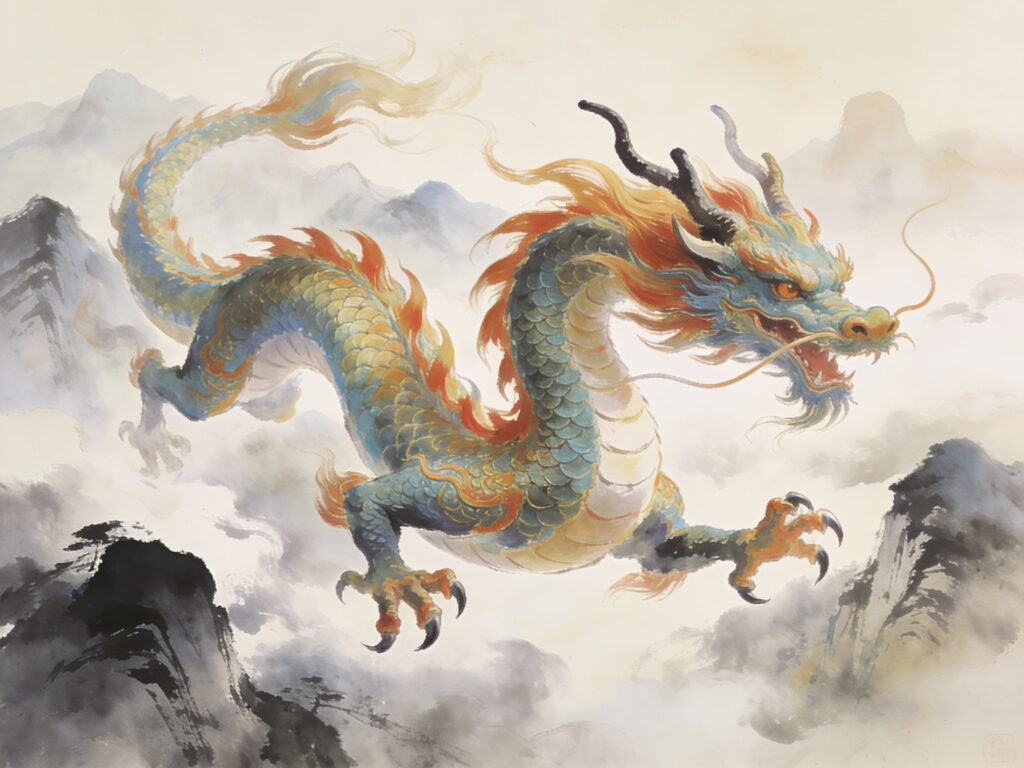
Definition: The Chinese dragon is a legendary creature symbolizing imperial power, prosperity, and auspiciousness. Unlike Western dragons, it is benevolent and associated with rain and water.
Key Traits:
- Serpentine body, antler-like horns, scales, and claws
- Controls rainfall, rivers, and seas
- Emblem of the emperor
Example: The Azure Dragon (Qīnglóng 青龙) is one of the Four Symbols of Chinese mythology, representing the East and spring.
Misconception: Not evil or fire-breathing as in Western mythologies.
Japanese Yōkai and Kitsune
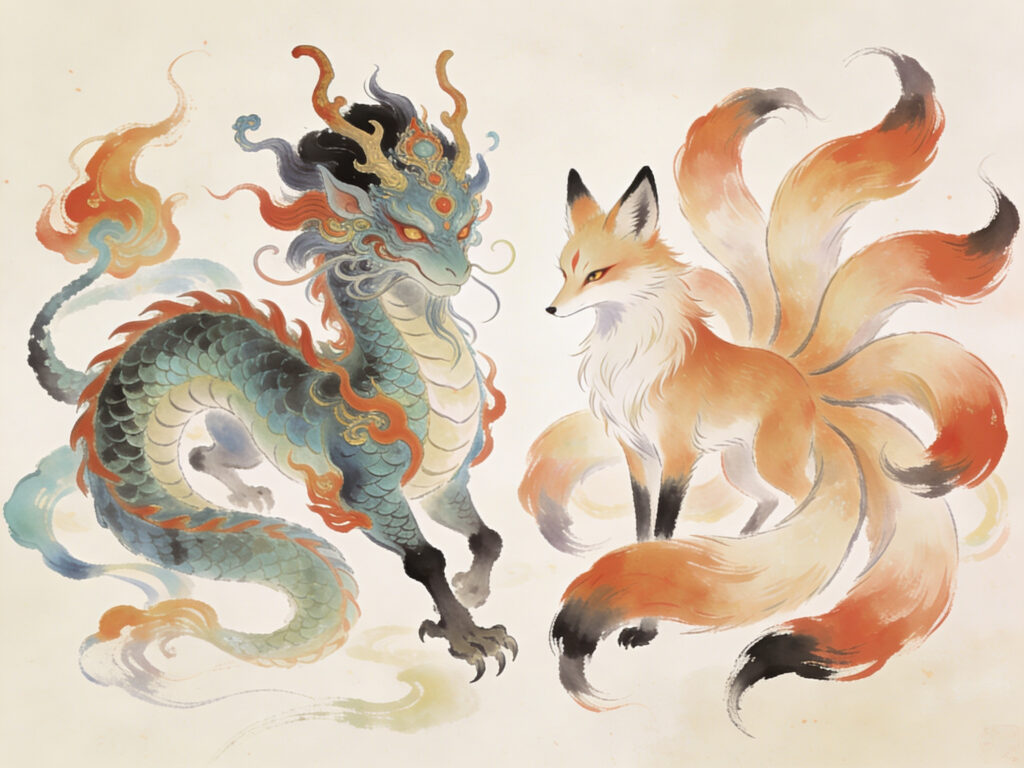
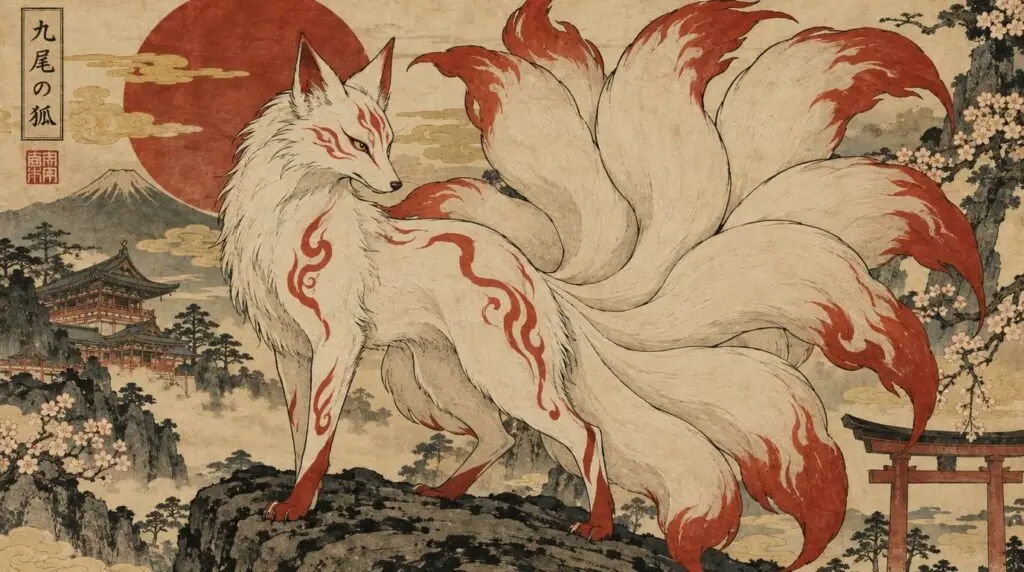
Definition: Yōkai are a broad class of supernatural entities and spirits in Japanese folklore. Kitsune (fox spirit) is among the most famous.
Key Yōkai Types:
- Kitsune: Shape-shifting fox, often female, can be a trickster or benevolent guardian.
- Tengu: Bird-like warrior spirit, sometimes mischievous or protective.
- Oni: Demonic ogre, brings disaster but can also be guardians.
Example: A Kitsune may serve as a messenger of the Shinto deity Inari.
Indian Nāga and Garuda
Definition:
- Nāga: Serpentine beings, sometimes deified as protectors of water and fertility; appear in both Hindu and Buddhist traditions.
- Garuda: Divine bird and mount of the god Vishnu, symbolizing kingship, strength, and martial prowess.
Example: Nāgas are guardians of treasures and sacred places; Garuda is depicted on national emblems in Indonesia and Thailand.
Korean Tiger and Gumiho
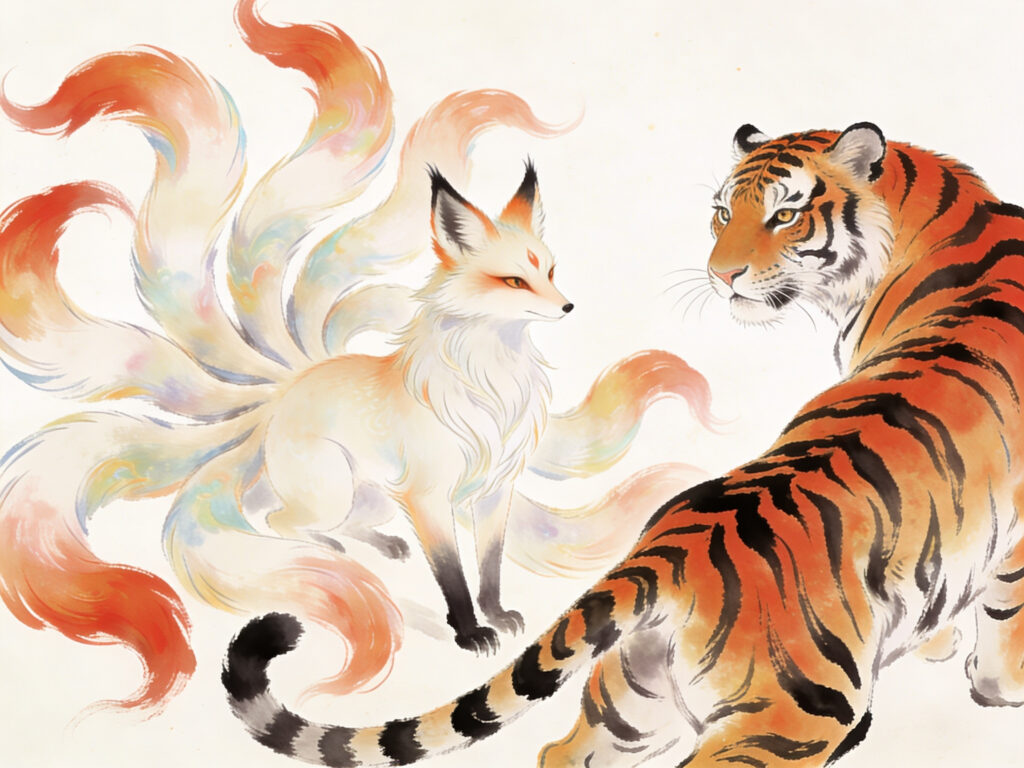
Definition:
- Tiger: National symbol of Korea, representing courage, protection, and the spirit of the land.
- Gumiho: Nine-tailed fox, a shape-shifter that can be benevolent or dangerous.
Example: Tigers appear in Korean art and shamanic rites. The Gumiho is a frequent figure in Korean folktales and modern dramas.
Southeast Asian Naga, Garuda, and Aswang
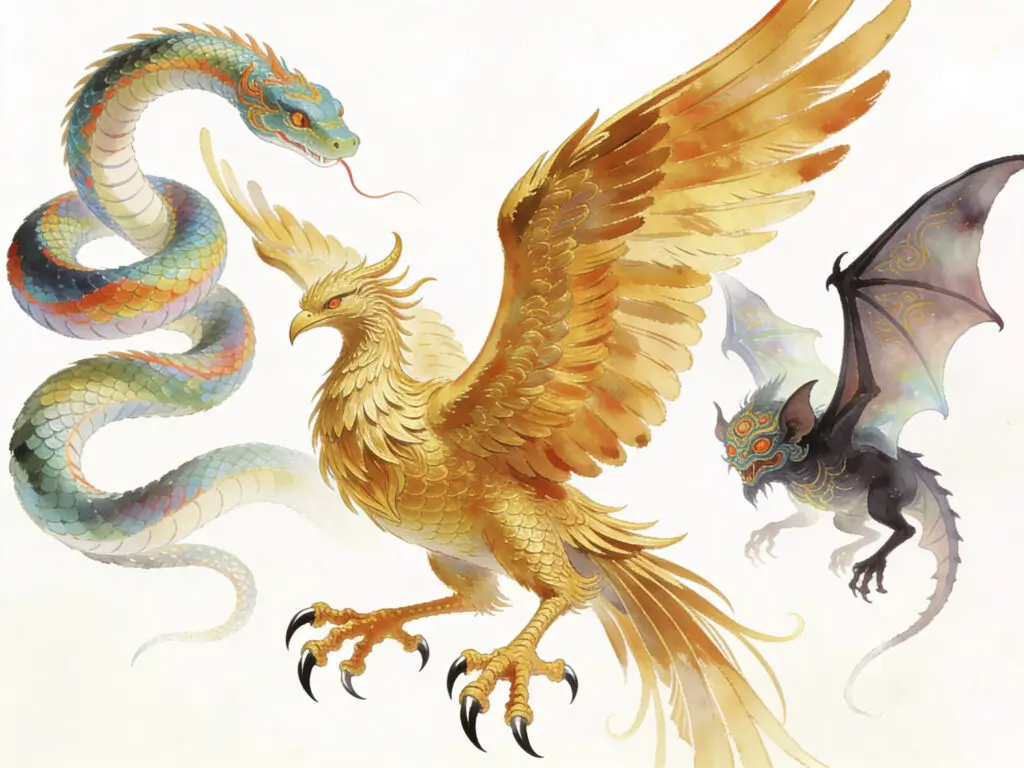
Naga: Similar to Indian Nāga but adapted in Buddhist and animist contexts in Thailand, Cambodia, Laos, and Indonesia. Garuda: National symbol of Indonesia, also appears in Thailand and Hindu-Buddhist mythology. Aswang: Philippine shapeshifting monster, often a vampire or ghoul.
Example: The Naga is associated with the Mekong River and is celebrated in festivals. The Aswang appears in Philippine horror stories.
Other Notable Creatures
- Qilin (China): Hooved chimera, omen of prosperity and serenity.
- Phoenix (Fenghuang, China): Symbol of virtue, grace, and the Empress.
- Kinnari (Thailand/Cambodia): Half-bird, half-woman, embodies beauty and compassion.
- Rangda & Barong (Bali): Represent chaos and order in Balinese ritual drama.
How Mythical Creatures Work in Asian Cultures
Process and Roles
- Myth Creation: Oral traditions, religious syncretism, adaptations.
- Symbolic Assignment: Assigning attributes (e.g., dragon for power, fox for cunning).
- Cultural Transmission: Through festivals, literature, art, and performance.
- Contemporary Reinterpretation: Modern media, tourism, branding.
Example: The Chinese New Year’s Nian monster is ritually driven away by firecrackers and red color, a practice still alive today.
Types and Categories of Asian Mythical Creatures
| Type | Region | Symbolism | Typical Role |
|---|---|---|---|
| Dragons | East/Southeast Asia | Power, rain, luck | Guardian, ruler |
| Serpents/Nāga | South/East/Southeast | Water, fertility, chaos | Guardian, threat |
| Fox Spirits | East Asia | Cunning, transformation | Trickster, guide |
| Bird Spirits (Garuda, Phoenix) | South/East Asia | Nobility, virtue, victory | Emblem, protector |
| Ogres/Giants | Across Asia | Strength, chaos, fear | Opponent, guardian |
| Shape-shifters | Across Asia | Ambiguity, danger | Cautionary figure |
| Hybrid Beasts | Across Asia | Harmony, auspiciousness | Omens, guardians |
Comparison Table Example:
| Creature | Best For | Complexity | Notable Countries |
|---|---|---|---|
| Dragon | Symbolism/Art | High | China, Japan, Vietnam |
| Kitsune | Folklore/Media | Medium | Japan |
| Nāga | Ritual/Religion | Medium | India, Thailand |
| Garuda | National Icon | Medium | Indonesia, Thailand |
| Aswang | Folklore/Horror | Low | Philippines |
Advanced Considerations
- Syncretism: Many Asian mythical creatures have blended attributes from different religions and regions. For example, the Balinese Barong has Hindu, animist, and local influences.
- Political Symbolism: Creatures like the dragon and Garuda are used in national emblems and political iconography.
- Modern Media: Anime, video games, and Hollywood have globalized and transformed these creatures, sometimes distorting traditional meanings.
- Ritual vs. Entertainment: A creature’s role can shift from sacred to secular over time.
Example: The Japanese Oni, once feared, now appears in children’s festivals and pop culture.
Frequently Asked Questions
Q1: What is the difference between a Chinese dragon and a Western dragon? A: Chinese dragons are benevolent, associated with water and weather, and symbolize power and good fortune. Western dragons are often depicted as fire-breathing, winged beasts representing chaos or evil.
Q2: Why are fox spirits so prominent in East Asian mythology? A: Foxes are revered for their intelligence and adaptability. In China, Japan, and Korea, fox spirits represent transformation, cunning, and sometimes serve as messengers or tricksters.
Q3: Are all Asian mythical creatures considered dangerous? A: No. Many, like the qilin or phoenix, are auspicious and benevolent. Others, like the aswang or oni, are cautionary or malevolent.
Q4: How do mythical creatures influence modern Asian culture? A: They appear in festivals, art, branding, and popular media, continuing to shape cultural identity and imagination.
Q5: How do I know if a creature’s story is authentic? A: Cross-reference with primary sources, consult scholarly works, and consider cultural context.
Q6: Are these creatures still believed in today? A: While literal belief has diminished, many are still respected or referenced in rituals, art, and storytelling.
Q7: Can the same creature have different meanings across countries? A: Yes. Example: The naga is a river guardian in Thailand and a semi-divine serpent in India.
Q8: What is the role of dragons in Southeast Asia? A: Dragons appear as protectors of water, fertility, and royalty, with unique local adaptations.
Q9: What’s the best way to start learning about Asian mythology? A: Read foundational texts, explore encyclopedia entries, and engage with multimedia documentaries.
Q10: How are mythical creatures depicted in modern media? A: They appear in anime, films, games, and tourism marketing, often with creative reinterpretation.