The most common stories about dragons include myths, legends, and folktales where dragons are depicted as powerful creatures, sometimes as adversaries to heroes, sometimes as wise guardians, and sometimes as symbols of chaos or fortune. These stories span cultures, with famous examples from European, Asian, and Middle Eastern traditions.
What is a Dragon in Mythology?
A dragon is a legendary creature often described as a large, serpentine, fire-breathing reptile. In mythology, dragons symbolize power, wisdom, or destruction, depending on the cultural context.
How Do Dragon Stories Differ Across Cultures?
- European Stories: Dragons are usually antagonist, beasts to be slain by heroes (e.g., Saint George and the Dragon, Beowulf and the dragon).
- Asian Stories: Dragons are revered as wise, benevolent beings who control rain and rivers (e.g., the Chinese Dragon Kings, Japanese Ryu).
- Middle Eastern Stories: Dragons often embody chaos or evil (e.g., Tiamat in Babylonian myth).
What Are the Most Famous Dragon Legends?
Saint George and the Dragon : A tale of a knight who rescues a town by slaying a fearsome dragon.
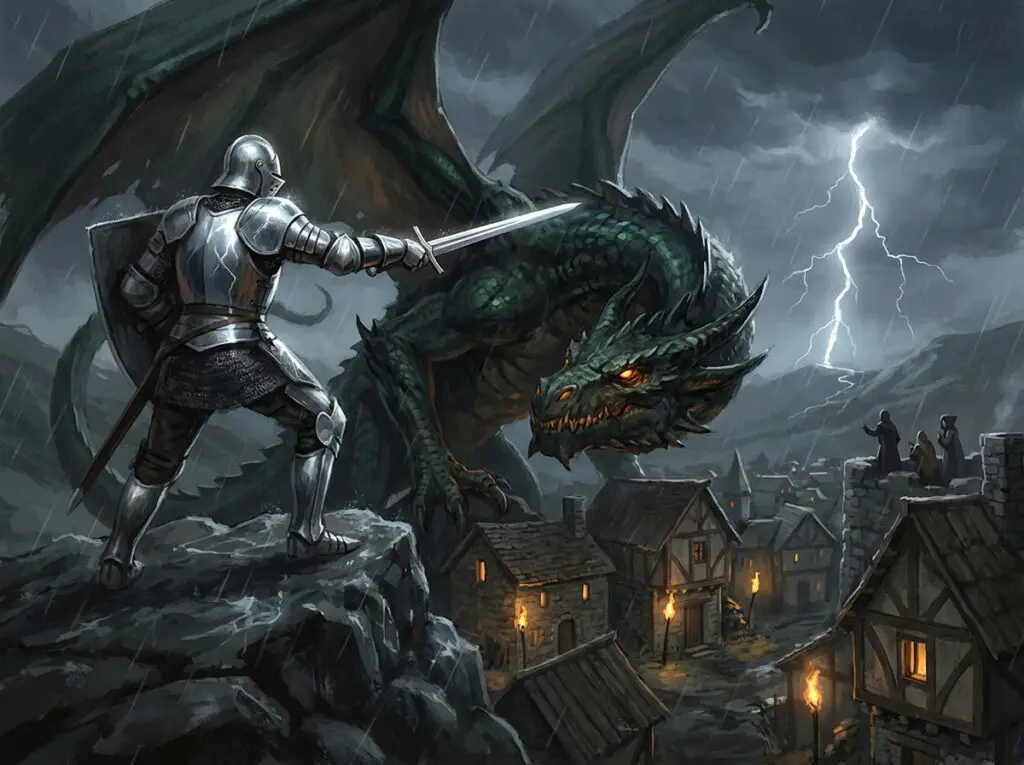
The city of Silene was tormented by a venomous dragon that demanded daily sacrifices of sheep and human children to appease its wrath. When the king’s own daughter was chosen by lottery as the next sacrifice, she was left alone by the lake to face the beast. Fortunately, the traveling Christian knight Saint George arrived just in time, refusing to flee and pledging to protect the princess. Fortified by the sign of the cross, George charged the dragon and severely wounded it with his lance. Using the princess’s girdle as a leash, he led the tamed beast back to the city and offered to slay it if the citizens converted to Christianity. The king and his people eagerly agreed, prompting Saint George to behead the dragon and rid the land of its terror forever.
Fafnir (Norse Mythology) : Fafnir, once a dwarf, becomes a dragon to guard his cursed treasure, defeated by the hero Sigurd.
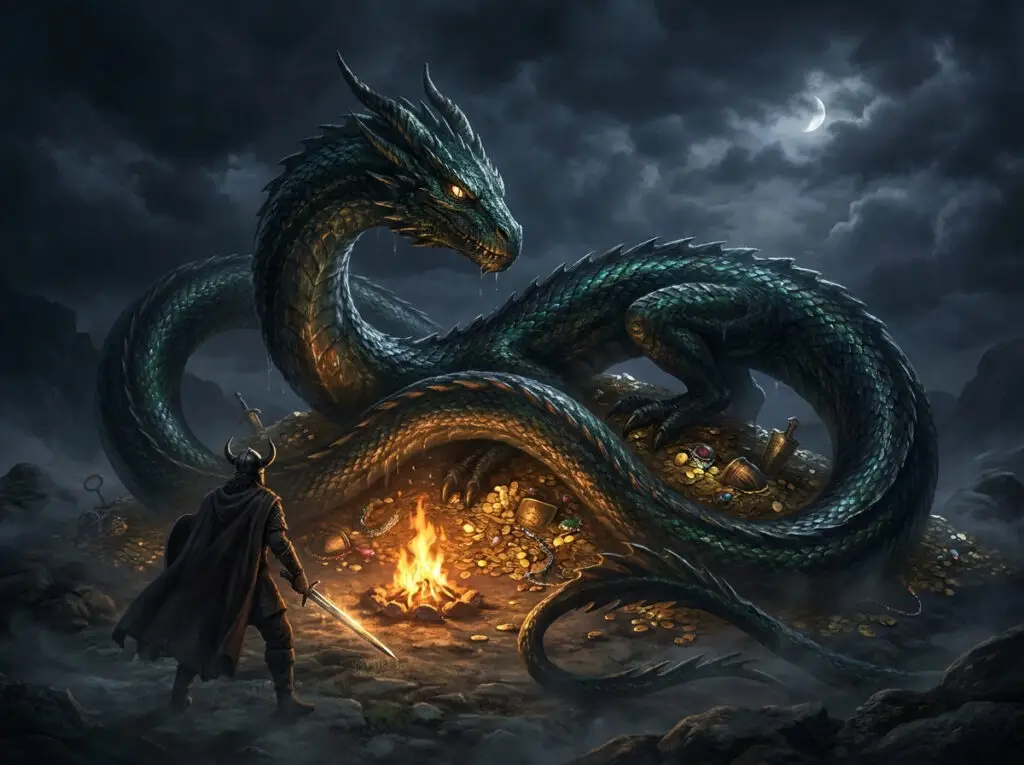
Originally a dwarf, Fafnir murdered his own father to claim a massive hoard of cursed gold and transformed into a fearsome dragon to guard his ill-gotten treasure. His treacherous brother, Regin, manipulated the young hero Sigurd into targeting the beast, forging the legendary sword Gram for the task. Advised by the god Odin, Sigurd dug a concealed pit along the monster’s path to the water and thrust his blade upward to pierce Fafnir’s heart as he slithered overhead. By roasting the slain dragon’s heart and accidentally tasting its blood, Sigurd magically gained the ability to understand the speech of birds. These birds immediately warned the hero of Regin’s impending betrayal, allowing Sigurd to slay the treacherous brother and safely claim the hoard for himself.
Yamata no Orochi (Japanese Mythology) : The eight-headed dragon defeated by the storm god Susanoo.
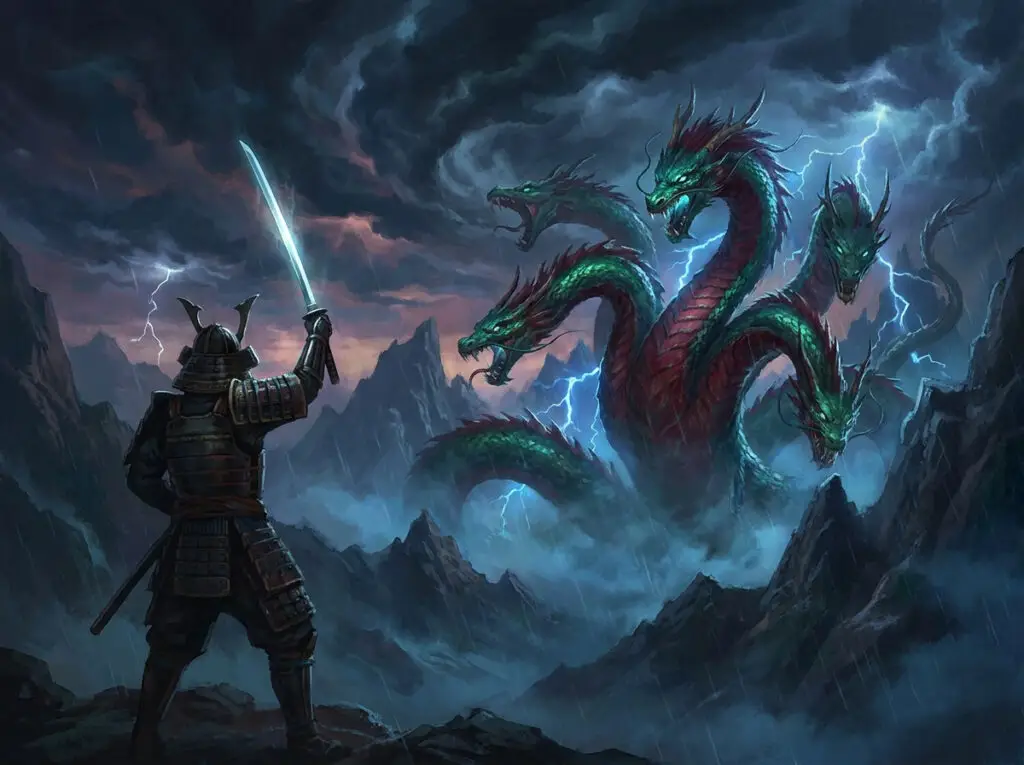
After being exiled from heaven, the storm god Susanoo encountered a weeping earthly couple whose daughters were being systematically devoured by Yamata no Orochi, a monstrous eight-headed and eight-tailed dragon. To save their final daughter, Kushinadahime, Susanoo transformed her into a comb to hide her safely in his hair and promised to slay the beast in exchange for her hand in marriage. As a trap, he instructed the parents to brew eight vats of highly potent sake and place them behind an eight-gated fence to entice the massive creature. When the serpent arrived, each of its eight heads drank deeply from the vats, causing the monster to become heavily intoxicated and fall into a deep, vulnerable slumber. Susanoo immediately drew his blade and hacked the helpless dragon to pieces, famously discovering the legendary sacred sword, Kusanagi-no-Tsurugi, hidden within one of its severed tails.
Other Dragon stories
- Beowulf : The epic hero Beowulf confronts and defeats a treasure-hoarding dragon in his final battle.
- The Hydra (Greek Mythology) : A multi-headed dragon slain by Heracles as one of his twelve labors.
- Chinese Dragon Kings : Four Dragon Kings rule the seas and are associated with rainfall, prosperity, and imperial authority.
Common Themes in Dragon Stories
- Hero vs. Monster: A hero must overcome the dragon to save a kingdom, win a prize, or prove their valor.
- Guardianship: Dragons act as guardians of treasures or sacred places.
- Transformation: Some stories feature humans who become dragons due to greed or curses (e.g., Fafnir, Eustace Scrubb in Narnia).
- Wisdom and Power: In East Asian traditions, dragons are wise and bestow blessings.
Table: Comparison of Dragon Roles in Major Myths
| Region | Typical Role | Famous Example |
|---|---|---|
| Europe | Enemy/Adversary | Saint George, Beowulf |
| East Asia | Guardian/Deity | Dragon Kings, Lung (Chinese) |
| Middle East | Chaos/Primordial | Tiamat |
| Scandinavia | Cursed Mortal | Fafnir |
| Greece | Multi-headed Threat | Hydra |
Notable Dragons in Modern Fiction
- Smaug (The Hobbit)
- Drogon, Rhaegal, Viserion (A Song of Ice and Fire / Game of Thrones)
- Saphira (Eragon)
- The Dragon in Shrek
FAQ: Most Common Stories About Dragons
What is the oldest dragon story?
The oldest known dragon stories trace back to ancient Mesopotamia, with Tiamat in the Enuma Elish (circa 2000 BCE) being one of the earliest.
Why do dragons appear in so many cultures?
Dragons symbolize natural forces, power, and mystery, appearing across cultures due to their universal appeal as representations of the unknown.
Are dragons always evil in myths?
No. In Western myths, dragons are often evil, but in East Asian myths, dragons are positive symbols associated with wisdom and prosperity.
What is the most famous dragon story in Europe?
The story of Saint George and the Dragon is one of the most famous in European folklore.
How are dragons depicted in Chinese stories?
Chinese dragons are usually benevolent, wise, and bringers of rain, often associated with emperors and good fortune.
What do dragons guard in myths?
Dragons commonly guard treasures, magical relics, or sacred places (e.g., Fafnir’s hoard, the Golden Fleece).
When did dragons become popular in modern fiction?
Dragons have been popular in modern fiction since the 19th century, with works like “The Hobbit” and “Game of Thrones” furthering their fame.