The Púca and the Banshee are two of the most enduring supernatural figures in Irish and broader Celtic folklore. The Púca is generally understood as a volatile, shape-shifting spirit associated with liminal places, nocturnal movement, seasonal transition, and misrule. The Banshee (from the Irish bean sídhe, often translated as “woman of the fairy mound”)is a spirit of lamentation whose cry announces death or impending loss within particular family lines or territories. Together, these figures reveal how Celtic-speaking communities interpreted uncertainty, mortality, landscape, and the porous boundary between the human world and the Otherworld.
These beings are not simply “ghosts” in the modern popular sense, nor are they identical to later fantasy monsters. The Púca is not merely a trickster animal, and the Banshee is not merely a screaming apparition. Each belongs to a larger cultural system of belief involving sacred geography, oral tradition, kinship memory, seasonal ritual, and the moral ambiguity of supernatural power. In older tradition, spirits were rarely divided neatly into “good” and “evil”; rather, they were potent, local, and relational.
For readers interested in Celtic mythology, folklore studies, and the evolution of legendary beings, these two figures offer an unusually rich case study. Their legends shaped ideas about how one should travel, mourn, harvest, remember ancestors, and interpret strange events. They also show how premodern oral tradition changes under Christianity, literary revival, tourism, cinema, gaming, and internet culture.
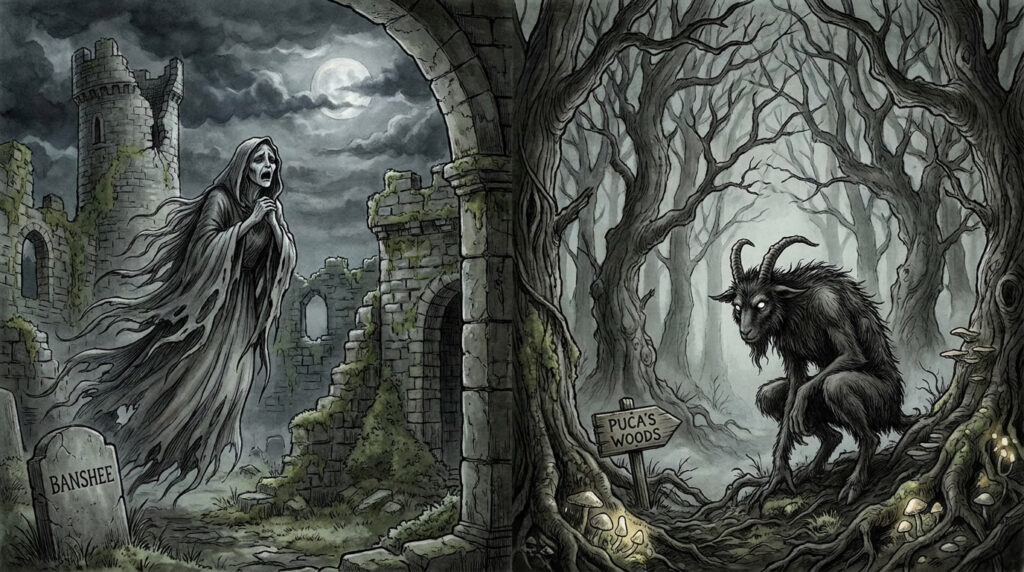
Table of contents
- Definition and Historical Overview
- Core Concepts
- How These Legends Worked in Ancient Culture
- Types and Variations
- Best Practices for Interpreting Celtic Spirit Lore
- Frequently Asked Questions
Definition and Historical Overview
The Púca and the Banshee emerge from the overlapping worlds of Irish folklore, Celtic mythic imagination, and vernacular belief. Their origins are best approached not as single moments of invention, but as layered developments shaped by oral storytelling, local geography, linguistic change, medieval recordkeeping, and later literary preservation.
The Púca appears in later folklore rather than in the earliest mythological narratives in a fully stable form. Scholars and collectors have linked the term to related figures such as the English puck and the Welsh pwca, suggesting a broad family of northwestern European beings associated with mischief, deception, animality, and instability. In Irish tradition, however, the Púca developed a distinct identity: a dangerous or ambivalent spirit capable of taking multiple forms, especially black horses, goats, hares, or hybrid beings. Its strongest associations include wild spaces, roads, hills, and the Samhain season.
The Banshee has a somewhat different cultural profile. Rather than functioning primarily as a deceiver, she belongs to the sphere of mourning, death-warning, and ancestral continuity. The name bean sídhe links her to the sídhe, the mounded Otherworld dwellings associated with fairy beings and supernatural presences. Early Irish tradition preserves many female figures of lament and sovereignty, and while the later folkloric Banshee should not be collapsed into all of them, the type clearly resonates with older traditions of ritual keening, female prophecy, and the charged bond between land, lineage, and death.
From an intellectual history perspective, these legends matter because they preserve evidence of how communities thought before modern secular categories took hold. Strange cries in the night, dangerous roads, unexplained accidents, sudden death, and emotional dread were not random experiences; they were folded into narrative systems that made them legible.
Core Concepts
1. The Otherworld and Liminal Space
A foundational concept in Celtic folklore is liminality—the condition of being between states, categories, or places. The Púca and the Banshee both inhabit thresholds: dusk and night, road and field, hill and hollow, life and death, harvest and winter. They are not domestic beings in the ordinary sense. Their presence is strongest where boundaries weaken.
For the Púca, liminality appears in haunted roads, mountain passes, ruined places, and seasonal turning points, especially Samhain. For the Banshee, liminality appears at the edge of death, outside windows, near family homes, or in transitional moments when a household senses loss before it arrives.
This matters because ancient and medieval communities often understood boundaries as spiritually active. A crossroads, a burial mound, or the final night of harvest was not neutral space. Such locations gathered narrative energy and ritual caution.
2. Shape-Shifting and Instability
The Púca is one of the clearest Celtic examples of shape-shifting as a sign of supernatural instability. Rather than having one true visible form in the way a later fantasy creature might, the Púca manifests through shifting appearances: horse, goat, dog, hare, or human-animal hybrid. This mutability signals power. It also signals that appearances cannot be trusted.
In traditional cultures, this was more than imaginative spectacle. Shape-shifting dramatized a world in which the categories separating animal, spirit, and person were not absolutely fixed. A traveler who assumed the visible world was always transparent could be misled.
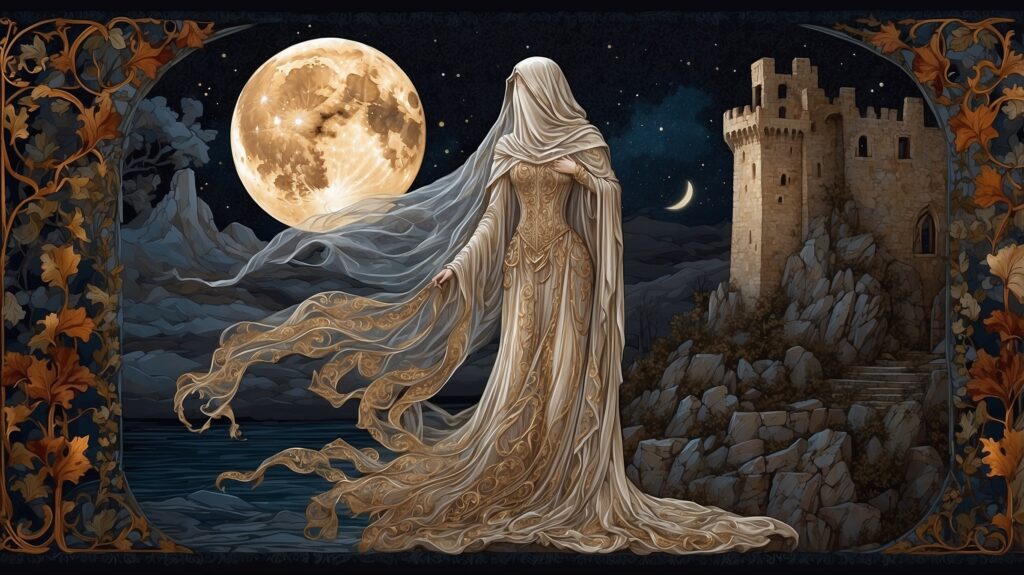
By contrast, the Banshee usually does not operate through broad bestial transformation. Her variability lies more in presentation: beautiful young woman, veiled matron, washerwoman, pale mourner, or spectral keening figure. Her identity is more stable in function than in appearance.
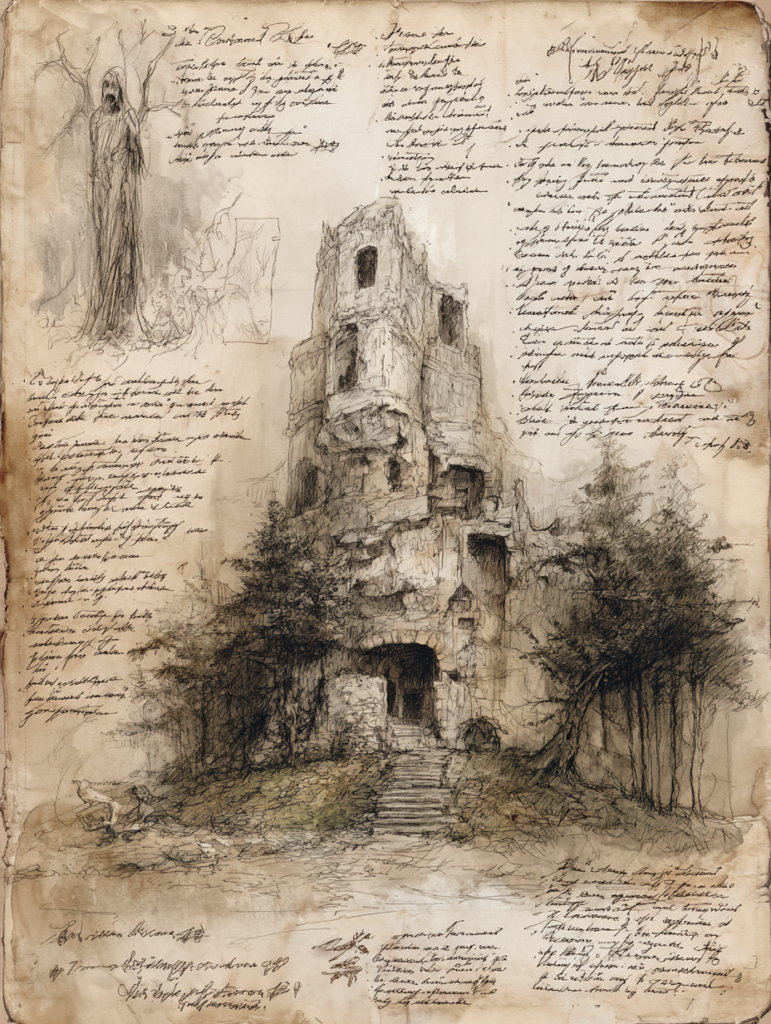
[ILLUSTRATION PLACEHOLDER: Comparative sketch board of traditional Púca forms—horse, goat, hare, black dog—and Banshee visual variants—keening woman, veiled mourner, washer at the ford.]
3. Voice as Supernatural Force
The Banshee is one of folklore’s clearest examples of sound as omen. Her cry is not merely frightening noise; it is meaningful sound. In many traditions, the sound arrives before the fact of death is publicly known, making it a revelation, warning, or confirmation.
The Púca also speaks in some tales, sometimes in a human voice, sometimes as a persuasive deceiver, sometimes as a mocking presence. Speech allows the Púca to lure, direct, mislead, or unsettle.
In both cases, voice matters because oral cultures treat sound differently from text-heavy modern societies. To hear was to receive. The lament, the warning, the prophecy, and the trick all traveled through voice.
4. Relationship to Landscape
Neither figure is fully detachable from place. The Púca belongs to rough terrain, margins, and the uncultivated edge of settlement. The Banshee is often tied to particular families, districts, or ancestral estates. This localism is critical.
Folklore thrives not in abstraction but in named places. A hill, a lane, a ruined churchyard, a river crossing, or a mound becomes believable because it is locatable. Once a community attaches a legend to a place, the place itself becomes a memory device.
For scholars, this means the legends encode environmental knowledge. Dangerous roads become Púca roads. Houses shadowed by recurring loss become Banshee houses. Myth and practical memory reinforce each other.
5. Death, Warning, and Social Order
The Banshee’s role is not to kill but to announce. This distinction is important. She is a herald, not usually an executioner. Her appearance or cry situates death within a social and spiritual framework, giving families a way to narrate grief before formal confirmation.
The Púca, by contrast, tests social order through disruption. It startles livestock, misdirects travelers, spoils assumptions, and may punish arrogance or drunkenness in some traditions. Where the Banshee interprets mortality, the Púca dramatizes unpredictability.
6. Christian Overlay and Survival
By the medieval and early modern periods, these legends existed in societies deeply shaped by Christianity. As a result, older supernatural figures were often reinterpreted as demonic, morally suspect, or spiritually dangerous. Yet they did not disappear.
Instead, they survived through adaptation. The Banshee could coexist with Christian funeral practice because lamentation already had strong social legitimacy. The Púca survived as a cautionary being linked to disorder, temptation, and the uncanny.
How These Legends Worked in Ancient Culture
A functional model of belief
Ancient and premodern folklore often works through a simple but powerful pattern:
Event or anxiety → supernatural interpretation → social response → cultural memory
Step 1: Encounter or uncertainty
A person hears wailing near the house. A rider disappears on a lonely road. Livestock become disturbed near harvest time. Someone senses an oppressive presence on a hill after sunset.
Step 2: Narrative classification
The event is identified through known categories. If the event concerns mourning, kinship, and dread, it may be interpreted as Banshee activity. If it involves deception, animal presence, or dangerous movement across the landscape, it may be interpreted as the Púca.
Step 3: Communal response
Once named, the event becomes actionable. A household prepares emotionally for death. Travelers avoid certain routes or times. Harvest customs are observed with greater seriousness. Children are warned against wandering.
Step 4: Transmission
The event is retold, gaining authority through repetition. Over time, anecdote becomes local tradition. Local tradition becomes folklore.
Social functions of the Púca
The Púca likely served multiple cultural functions:
- Travel caution: night roads and unfamiliar terrain were genuinely dangerous.
- Seasonal warning: Samhain was a moment of ritual vulnerability and agricultural transition.
- Moral teaching: tales often punish recklessness, drunkenness, mockery, or overconfidence.
- Explanation of misfortune: crop damage, accidents, and uncanny encounters could be narratively absorbed.
Social functions of the Banshee
The Banshee likewise served practical and emotional roles:
- Grief framing: death was integrated into an expected symbolic order.
- Kinship reinforcement: families with a Banshee were marked by history and continuity.
- Validation of intuition: premonition and dread were treated as culturally meaningful.
- Ritual resonance: keening traditions gave form to mourning as a communal act.
Before-and-after example
| Situation | Without folklore frame | With folklore frame |
|---|---|---|
| Unexplained wailing at night | Random noise, fear, confusion | Banshee warning linked to family mortality |
| Dangerous horse encounter on isolated road | Accident risk | Púca encounter warning against reckless travel |
| Sudden livestock agitation near season’s end | Animal stress | Sign of supernatural unrest at Samhain |
| Household dread before news of illness or death | Anxiety without narrative | Emotion structured through omen tradition |
Types and Variations
Types of Púca Traditions
1. The Equine Púca
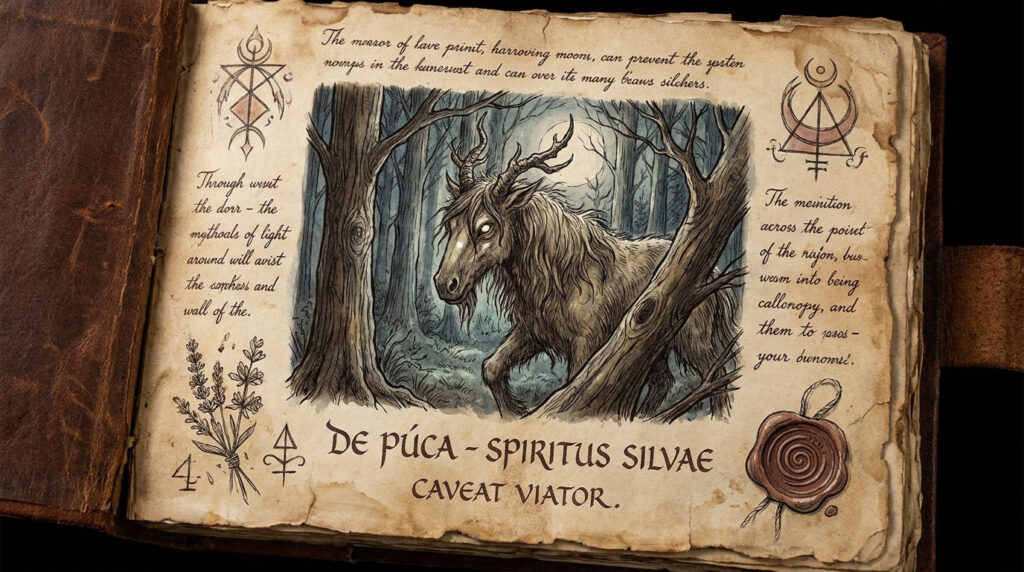
This is perhaps the best-known form: a dark horse or pony, often inviting or tricking a person to ride. Once mounted, the rider loses control. This motif parallels broader water-horse and phantom-horse traditions but remains distinct in Irish folklore because of the Púca’s shape-shifting and seasonal associations.
Best for understanding: danger, deception, movement, and rural fear.
Pros for interpretation: highly symbolic and narratively vivid.
Limitations: can be over-assimilated to later horror tropes.
2. The Goat or Hybrid Púca
Some traditions emphasize horned or mixed forms, blending man and beast. These versions highlight wildness, demonic reinterpretation, and the breakdown of ordinary categories.
Best for understanding: Christian-era visual imagination and fear of the untamed.
Pros: shows how folklore absorbs moral imagery.
Limitations: later art sometimes exaggerates features not equally emphasized in early testimony.
3. The Prophetic or Speaking Púca
In some stories, the being does more than terrify: it answers questions, gives forecasts, or speaks in a human voice. This version reveals the Púca as not only chaotic, but knowledgeable.
Best for understanding: the spirit as an intermediary being linked to hidden knowledge.
Pros: complicates the simplistic “monster” reading.
Limitations: less widely known in modern popular culture.
Types of Banshee Traditions
1. The Family Banshee
This form is attached to a particular lineage, especially old families whose ancestral identity is central to local memory. The Banshee becomes less a roaming ghost than a hereditary death-messenger.
Best for understanding: kinship, aristocratic memory, and continuity.
Pros: preserves social structure within legend.
Limitations: later romanticism sometimes overstates exclusivity.
2. The Keening Woman
Here the Banshee appears as a spectral mourner whose function resembles ritual lament. This form closely aligns folklore with historical mourning customs.
Best for understanding: the bond between supernatural warning and funeral culture.
Pros: culturally grounded and socially legible.
Limitations: often flattened in modern media into a generic scream.
3. The Washer at the Ford
Some traditions overlap with the broader “washerwoman of death” motif in Celtic regions. A female supernatural figure washing bloodstained garments before battle or death is not identical in every case to the Banshee, but the comparison is useful.
Best for understanding: how related female death-figures form a wider mythic cluster.
Pros: deep comparative value.
Limitations: requires caution to avoid treating all death-omens as the same being.
Comparison Table
| Figure Type | Core Function | Common Form | Best Interpreted As | Typical Setting |
|---|---|---|---|---|
| Equine Púca | Deception, danger | Black horse | Liminal trickster spirit | Roads, fields, passes |
| Hybrid Púca | Disorder, fear | Goat-man or beast-human | Boundary-breaker | Wild or haunted spaces |
| Speaking Púca | Warning or prophecy | Variable | Ambivalent knower | Hills, seasonal sites |
| Family Banshee | Death announcement | Mourning woman | Ancestral omen | Family home or estate |
| Keening Banshee | Ritual lament | Wailing female presence | Supernatural mourner | Night, thresholds |
| Washer-type death spirit | Premonition | Woman washing garments | Comparative omen figure | Ford, river, battlefield |
Best Practices for Interpreting Celtic Spirit Lore
Best Practices for Interpreting Celtic Spirit Lore
1. Distinguish mythology from folklore
Not every famous supernatural being belongs equally to early mythological texts. The Púca is especially important here: it is more securely folkloric than mythological in the strictest sense.
Why it works: It prevents anachronism.
Common mistake: Treating all Irish supernatural beings as if they appear fully formed in the earliest manuscripts.
2. Treat oral tradition as layered evidence
A nineteenth-century collector may preserve older material, but also later interpretation, editorial framing, and literary taste.
Why it works: Folklore is cumulative.
How to apply it: Compare linguistic, regional, and thematic layers rather than assuming one “original” version.
3. Read landscape as part of the text
In Celtic traditions, a hill, mound, lane, or ford is not background decoration. It carries narrative meaning.
Why it works: Place anchors belief.
Common mistake: Reading the legend apart from geography.
4. Avoid reducing the Banshee to horror iconography
Modern media often turns the Banshee into a shrieking monster. Traditional lore is subtler. She is tragic, liminal, and socially embedded.
Why it works: It preserves cultural specificity.
How to apply it: Connect the Banshee to keening, kinship, and mourning ritual.
5. Avoid reducing the Púca to comic fantasy
The Púca can be mischievous, but older tradition often presents genuine danger and deep ambivalence.
Why it works: It respects the seriousness of rural belief.
Common mistake: Equating the Púca with a harmless prankster sprite.
6. Compare, but do not collapse, related beings
The English puck, Welsh pwca, water horses, black dogs, and death-messengers all provide comparative value. But comparison is not identity.
Why it works: It preserves nuance.
How to apply it: Ask what is shared, what is local, and what changed through transmission.
7. Account for Christian reinterpretation
Later communities may frame older beings as demonic, ghostly, or morally suspect in ways earlier traditions did not.
Why it works: It explains tonal shifts over time.
Common mistake: Assuming later theological judgments were always original.
8. Use modern interpretations as evidence of change, not proof of origin
Film, novels, games, and online art are valuable, but they testify chiefly to modern reception.
Why it works: It separates source tradition from adaptation history.
How to apply it: Read modern portrayals alongside, not instead of, folk record.