What do the nine tails of a kitsune mean? In Japanese folklore, the nine tails of a kitsune usually symbolize great age, accumulated wisdom, spiritual power, and near-divine status. A kitsune is a supernatural fox spirit, and a nine-tailed kitsune represents the highest and most powerful stage in many later retellings of that tradition.
What is a kitsune?
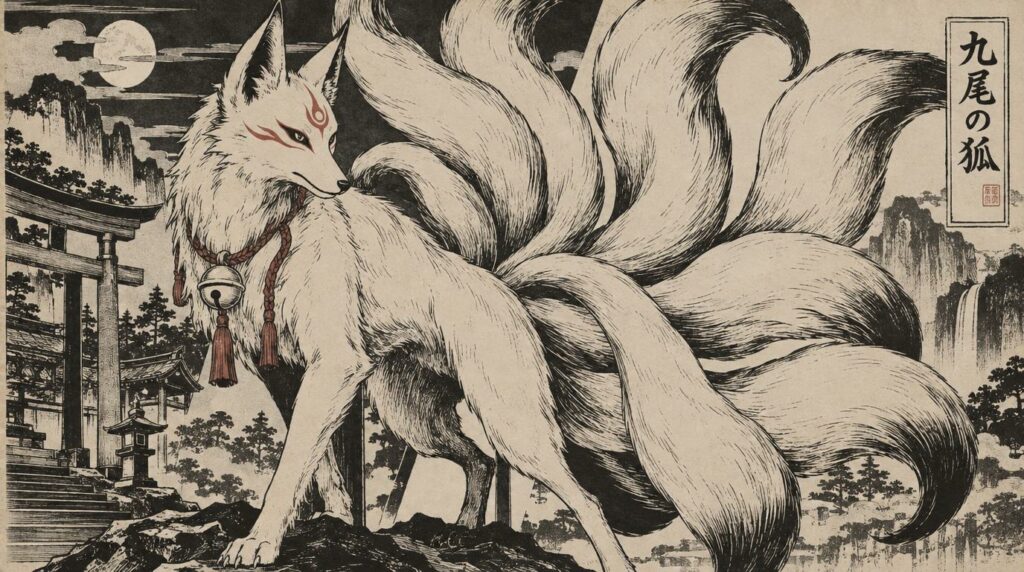
A kitsune is a fox spirit from Japanese folklore. Kitsune are commonly described as intelligent, magical beings associated with shapeshifting, trickery, protection, and in some traditions, service to Inari, a deity connected with rice, fertility, and prosperity.
Many sources describe kitsune as gaining strength with age. In popular explanations, a fox gains additional tails over time, and nine tails mark the creature’s most advanced form.
What do the nine tails symbolize?
The nine tails most often symbolize four connected ideas:
- Longevity: the fox has lived for centuries
- Wisdom: knowledge gained through long experience
- Spiritual potency: stronger magical and supernatural abilities
- Transformation: movement from an earthly fox spirit toward a celestial or exalted being
In many modern summaries, each extra tail suggests increasing power. However, older folklore does not always provide a strict “one tail equals one exact power” system. The clearest recurring idea is that nine tails signal exceptional maturity and status.
How does a kitsune gain nine tails?
A common folk explanation says a kitsune gains a tail after long aging, often described in later retellings as one tail per hundred years. Under that model, a nine-tailed kitsune has existed for roughly nine hundred years.
This timeline should be treated as a traditional motif, not a fixed historical rule across every source. Folklore changes by region, period, and storyteller.
What powers are associated with a nine-tailed kitsune?
A nine-tailed kitsune is commonly linked with advanced supernatural abilities such as:
- Shapeshifting into human form
- Illusion-casting or bewitching perception
- Heightened intelligence and foresight
- Fox-fire or kitsunebi, mysterious spirit flames
- Spiritual influence, including blessing, deception, or testing humans
These powers vary across literature, oral tradition, and modern media. For a broader background on the creature itself, see the site’s Kitsune guide and the wider Codex of the Beasts.
Do all nine tails have separate meanings?
Usually, no. Popular charts online often assign a distinct meaning or power to each tail, but that tidy system is mostly a modern interpretive framework rather than a universal classical standard.
In traditional folklore, the important meaning is less about nine separate categories and more about the final image: a fox spirit that has reached its highest state. That is why the nine-tailed kitsune is often portrayed as rare, luminous, and almost sacred.
Nine-tailed kitsune vs ordinary kitsune
| Type | Typical meaning | Power level | Folklore role |
|---|---|---|---|
| Ordinary kitsune | Fox spirit with magical potential | Moderate to high | Trickster, messenger, shapeshifter |
| Older multi-tailed kitsune | Increasing age and experience | High | More skilled in illusion and transformation |
| Nine-tailed kitsune | Peak wisdom, age, and spiritual rank | Very high | Exalted, legendary, sometimes celestial |
Why are nine tails important in symbolism?
The number nine often carries symbolic weight in mythic storytelling because it suggests completion, culmination, or the furthest stage of development. In kitsune lore, nine tails work as a visual shorthand for a long journey from animal cunning to supernatural mastery.
This makes the nine-tailed kitsune comparable to other legendary beings whose age increases their authority. Readers interested in cross-creature symbolism may also compare this theme with the site’s pages on dragons or related myth studies in The Journal.
What should readers remember first?
If a reader wants one simple answer, it is this: the nine tails of a kitsune mean the fox spirit has reached its highest legendary form, defined by age, wisdom, and extraordinary supernatural power.

Sources and folklore context
This page is based on widely repeated descriptions in English-language reference material on kitsune, especially summaries of Japanese folklore traditions. Because folklore differs by era and storyteller, symbolic interpretations should be read as common tradition, not absolute doctrine.
FAQ
Why does a kitsune have nine tails instead of one?
A kitsune is said to gain tails as it ages and grows in power. Nine tails represent the highest stage of that growth in many later retellings.
How long does it take a kitsune to get nine tails?
A common tradition says about nine hundred years, using the idea of one new tail per century. This is a folklore pattern, not a universally fixed rule.
Are the nine tails evil?
No. A nine-tailed kitsune is not automatically evil. In folklore, kitsune can be tricksters, protectors, messengers, or testers of human character, depending on the story.
What color is a nine-tailed kitsune?
Many later descriptions portray a nine-tailed kitsune as white or gold. Those colors often signal purity, spiritual rank, or celestial status.
Is every tail supposed to have a different power?
Usually not in older folklore. The idea that each tail unlocks a neatly defined new ability is mostly a modern simplification.
Where does the nine-tailed kitsune appear in Japanese belief?
The image appears in folklore, art, literary retellings, and modern popular culture rooted in Japanese fox-spirit traditions. It is especially associated with stories about age, illusion, and supernatural prestige.
When should a reader treat kitsune symbolism cautiously?
A reader should be cautious when a source presents one rigid tail-by-tail chart as universal. Kitsune lore is regional, layered, and historically varied.