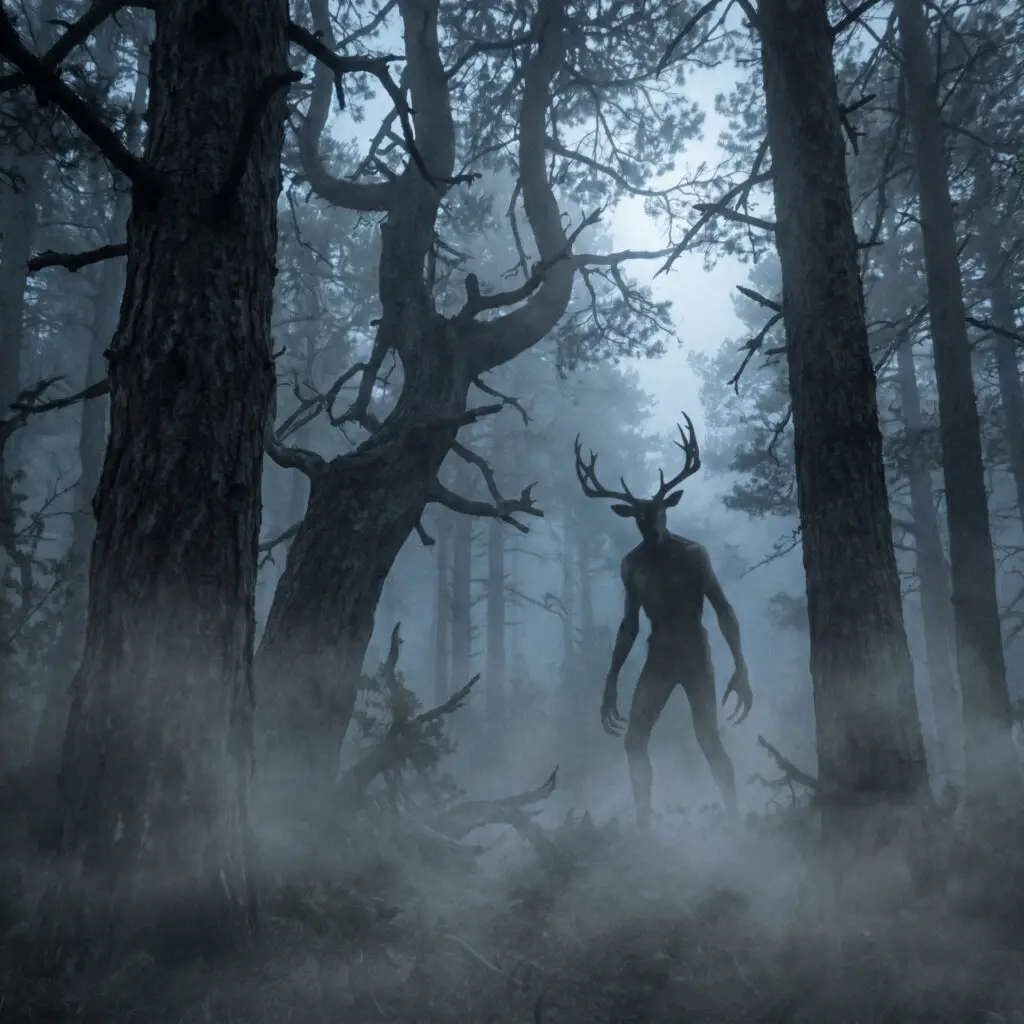
Something ancient is stalking the edges of our collective imagination again. Whether you’ve been diving into co-op horror games this winter, catching folk-horror shorts on the festival circuit, or simply doom-scrolling through horror fan communities, there’s one name that keeps surfacing : the Wendigo. This bone-chilling figure from Algonquian mythology is no longer a creature confined to dusty ethnography books or niche cryptid forums. In 2026, the Wendigo has elbowed its way into mainstream horror culture with remarkable force. But to truly understand why this creature resonates so deeply today, we need to go back to where it all began, deep in the frost-bitten forests of northeastern North America, where communities survived brutal winters and told stories that would outlast empires.
What Is the Wendigo? Origins in Algonquian Mythology
Wendigo mythology did not spring from a single author’s imagination or a single culture’s tradition. It grew organically over centuries among the Algonquian-speaking peoples, a vast linguistic family that includes the Cree, Ojibwe, Innu, Naskapi, and many other nations spanning what is now northeastern Canada and the northeastern United States.
The Peoples Behind the Legend
These nations shared not only language roots but also a common ecological challenge: harsh, unforgiving winters in sub-arctic forests, where food could disappear for weeks and survival sometimes came down to the grimmest of choices. The Wendigo emerged from this world, a world where the line between civilization and survival, between human and beast, was razor-thin.
For Algonquian communities, the Wendigo was not merely a monster story told to frighten children. It was a moral and spiritual framework, a way of naming the worst thing a person could become.
A Spirit Born from Greed and Hunger
At its core, Wendigo mythology describes a malevolent, cannibalistic supernatural being , either a spirit that possesses human hosts or a creature born when a person commits the ultimate taboo: consuming human flesh. What makes the Wendigo uniquely chilling is its mechanics of contagion. According to Algonquian oral traditions, the spirit can enter a person through possession during a dream, or through the act of cannibalism itself , turning the survivor of famine into the next predator.
The name varies across nations: Windigo, Wihtigo, Wetiko, Wechuge. But the meaning remains consistent, something like “evil spirit that devours mankind.”
Anatomy of Fear: What Does the Wendigo Look Like?
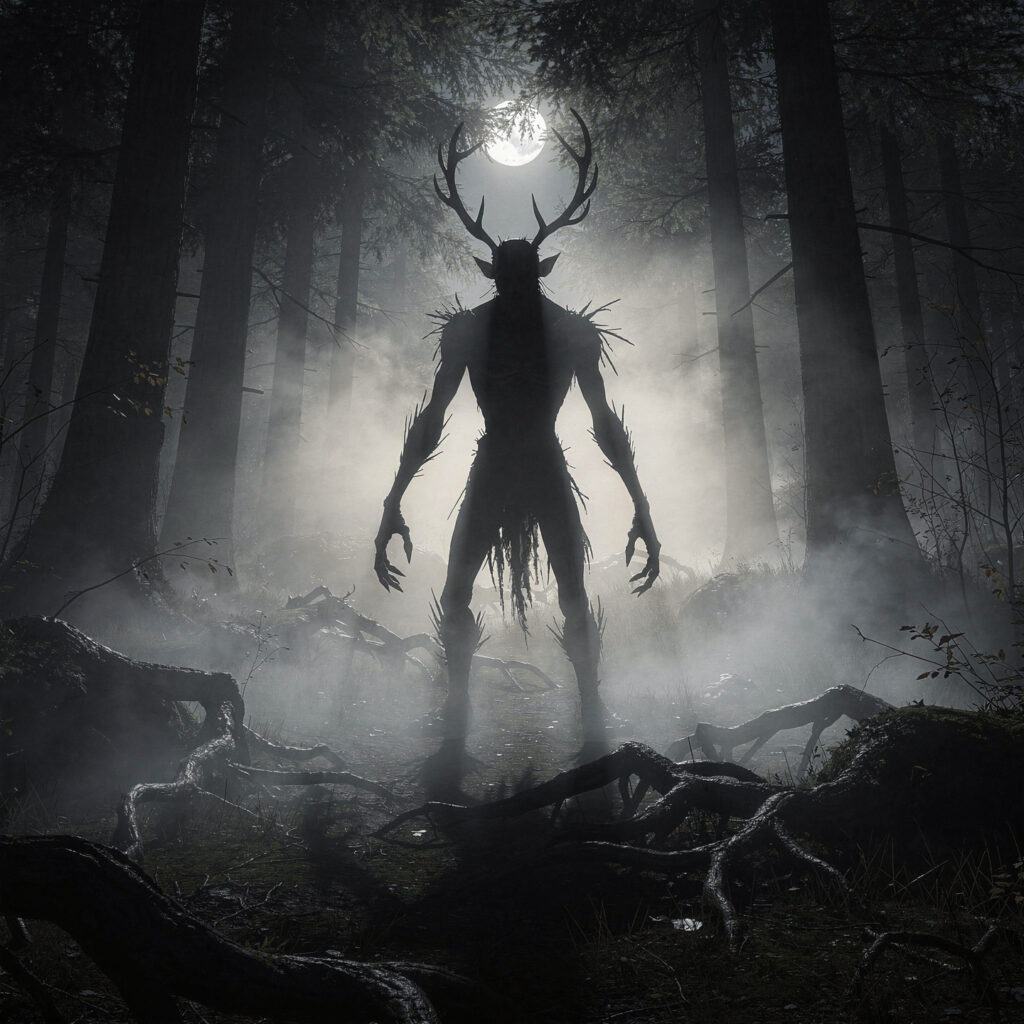
One of the most striking aspects of Wendigo mythology is how physically specific the descriptions are across different tribal traditions. This isn’t a vague bogeyman, the Wendigo has a deeply unsettling, recognizable silhouette.
Physical Descriptions Across Tribes
In the most widely shared accounts, the Wendigo is described as:
- Towering : sometimes said to reach 15 feet tall, always disproportionately tall compared to the humans it hunts
- Gaunt to the point of emaciation : its desiccated skin stretched paper-thin over its skeleton, bones visibly pushing against the flesh from within
- Ashen or pale grey skin, sometimes tinged yellow or spotted with frostbite
- Bloody, chewed lips and gnawed fingers : evidence of its insatiable, never-satisfied hunger
- A heart of ice : in some traditions, literally encased in ice, the frozen remnant of the human soul it once was
- Antlers or deer-like features in some regional traditions, blending predator and prey in one unsettling body
The detail that haunts most listeners is this: no matter how much the Wendigo eats, it only grows larger — its hunger growing in proportion to its body, never sated, never satisfied.
The Wendigo Transformation
Perhaps the most disturbing element of the myth is the transformation narrative. A person does not simply encounter a Wendigo, they can become one. Extreme cold, extreme starvation, the act of consuming human flesh out of desperation, any of these could trigger the change. The human being slowly loses their warmth, their empathy, their connection to community, replaced by an insatiable, predatory hunger that can never be filled.
This transformation is not just physical. It is moral. The Wendigo is what a person becomes when they choose themselves, their own survival, their own appetite, over all others.
The Wendigo in History: Real Encounters and Documented Cases
The Wendigo did not remain locked in oral tradition. It appears in historical records, colonial court documents, and ethnographic archives, evidence of how seriously these communities took the threat of Wendigo possession.
The Trial of Swift Runner
The most harrowing historical case is that of Swift Runner, a Cree hunter from what is now Alberta, Canada. In the winter of 1878–79, Swift Runner went into the wilderness with his wife and six children. In spring, he returned alone. He claimed starvation had taken them all.
But when RCMP officers investigated his camp, they found the remains of his family, consumed. Swift Runner confessed. He told investigators he had been possessed by a Wendigo spirit, driven beyond his control. He was arrested, tried, and on December 20, 1879, became the first person legally executed in the province of Alberta.
Wendigo Psychosis: When Legend Meets Medicine
Swift Runner’s case was not isolated. The 20th century brought a wave of documented cases that prompted Western physicians to coin the term “Wendigo psychosis” — a culture-bound syndrome characterized by an intense craving for human flesh, mounting dread of becoming a cannibal, and a conviction of supernatural possession.
In 1907, Oji-Cree chief and medicine man Jack Fiddler was arrested alongside his brother for killing a woman in his community believed to be transforming into a Wendigo. Far from denying the act, Fiddler explained it as mercy, he claimed to have killed over a dozen Wendigos in his lifetime, protecting his people from possession. He escaped custody and died by suicide before trial.
The clinical reality of “Wendigo psychosis” remains debated among anthropologists and psychologists today. What is not debated is that, for the communities who lived it, the Wendigo was no metaphor, it was a present, mortal threat.
The Moral Heart of the Myth: What the Wendigo Really Warns Us About
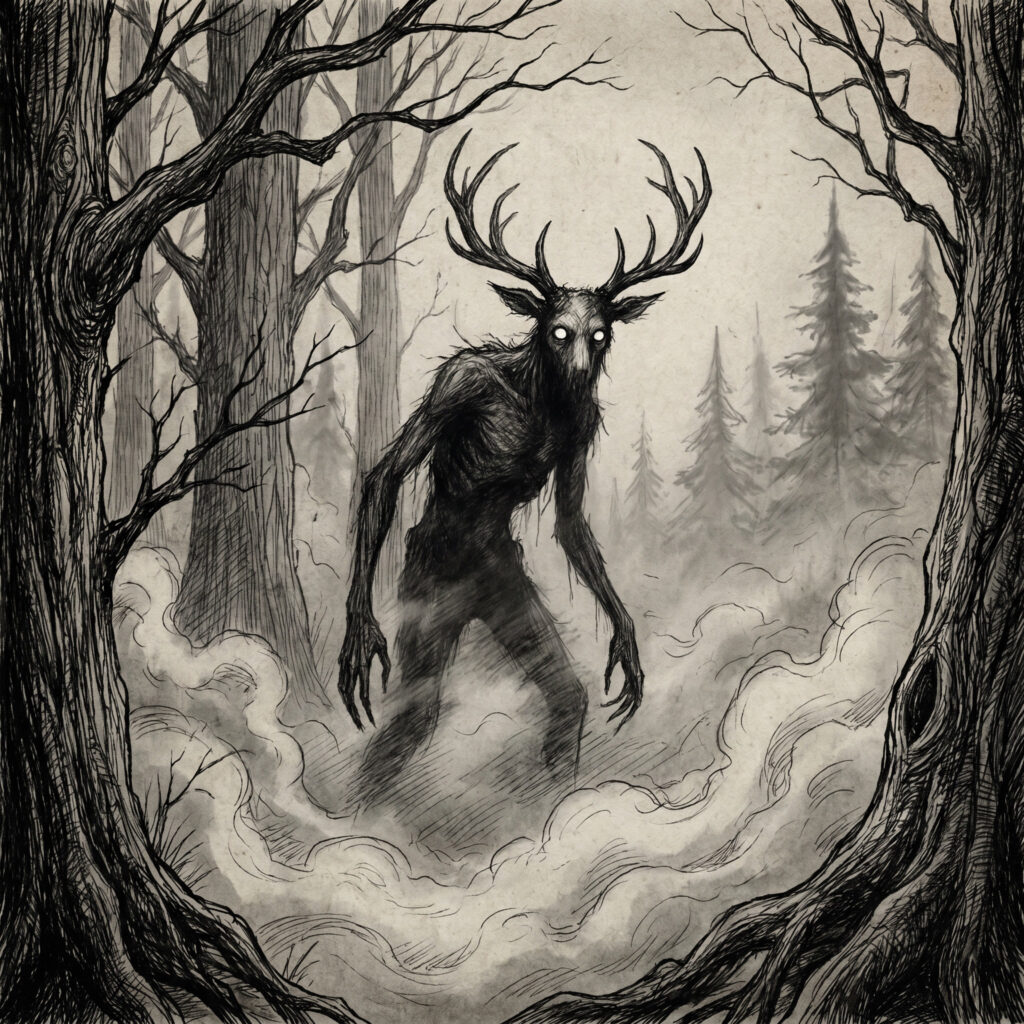
Strip away the antlers and the frozen heart, and Wendigo mythology delivers a message of striking modernity: unchecked consumption destroys you from the inside out.
The Wendigo is the embodiment of greed, of taking more than your share, of placing individual appetite above communal survival. In a world of Algonquian communities where sharing food in winter was literally the difference between life and death, the Wendigo gave moral weight and spiritual consequence to the worst impulse a person could act on.
Scholars have pointed out that this metaphor scales powerfully to contemporary issues, from corporate overconsumption and environmental destruction to social media’s hunger-without-satisfaction mechanics. The Wendigo doesn’t just eat people. It consumes without end and without meaning. In 2026, that resonates.
The Wendigo’s Pop Culture Invasion in 2026
The Wendigo has long haunted the fringes of pop culture — from Algernon Blackwood’s seminal 1910 horror novella The Wendigo, to its appearances in Pet Sematary, Supernatural, and Until Dawn. But 2026 has seen something different: a full cultural convergence around this creature, with multiple major works arriving in the same year.
Games: Folklore Hunter Brings the Legend to Life
On January 30, 2026, survival horror game Folklore Hunter officially launched its v1.0 on PC via Steam, with console versions to follow later in the year. In the game, players take on the role of hunters pursuing three legendary creatures in first-person, co-operative survival gameplay (the Wendigo, the Strigoi, and the Mothman). The Wendigo segment tasks players with navigating skull-filled caves and forest environments, leaning hard into the creature’s traditional description: gaunt, impossibly tall, driven by endless hunger.
The game has drawn praise for its commitment to folklore authenticity, bringing the Algonquian Wendigo’s mythology to a new generation of players in an interactive format that makes the terror genuinely felt.
Horror Cinema: Short Films, Full Features, and Wendehorn
2026 has been a banner year for Wendigo-themed cinema. In April 2026, The Wendigo (a folk-horror short film inspired by Algernon Blackwood’s original 1910 novella) premiered on the festival circuit, bringing the quiet dread of the source material to screen with a fresh interpretation.
Meanwhile, the full-length horror thriller “Ancient Predator” dropped this year, following college students who encounter the Wendigo deep in the wilderness — a nod to the creature’s traditional hunting grounds.
And the year is not over yet. Wendehorn, a horror feature written and directed by Mitchel Corrado, is tracking for a late October 2026 release — perfectly timed to strike just as Halloween horror appetite peaks. The creature of the same name is a direct Wendigo interpretation, set in a forbidden forest and positioned as one of the more ambitious creature-feature projects of the year.
Why the Wendigo Resonates More Than Ever
Other famous monsters have origin stories that are relatively distant, drawn from ancient Greece, medieval Europe, or far-off East Asian dynasties. The Wendigo is different. It comes from North America, from communities whose descendants still live on this land, still tell these stories, and still carry the cultural weight of these traditions.
That proximity, combined with the creature’s timeless metaphorical power, makes the Wendigo unusually potent in the hands of contemporary artists. It is both ancient and immediate, a creature of indigenous heritage that speaks directly to modern anxieties about hunger, greed, isolation, and what we’re willing to do to survive.
As horror creators continue to move away from recycled European vampire and werewolf lore, the Wendigo offers something richer: a mythology with genuine ethical depth, rooted in a specific landscape and worldview, with a message that still needs to be heard.
Conclusion
The Wendigo began as a story told beside fires in the frozen north — a warning about what happens when hunger becomes the only god you worship. Centuries later, it walks again through our horror games, our film festivals, and our cultural conversations. Wendigo mythology endures not because it’s simply scary (though it is), but because what it represents — the insatiable consumer, the person who takes until there is nothing left — is a horror we recognize in ourselves and in our world.
If 2026’s wave of Wendigo-inspired works has you curious, start with the original: Algernon Blackwood’s 1910 novella remains one of the most chilling things ever put to page. Then fire up Folklore Hunter, and try not to flinch.
The forest is always closer than you think.