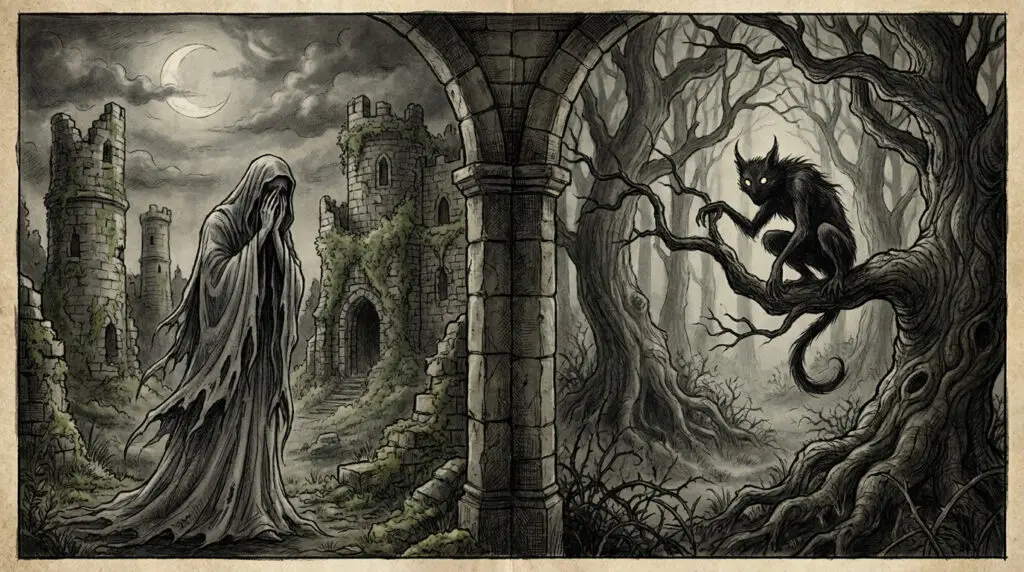
The most famous mythical creatures in Celtic legends include the Banshee, Kelpie, Abhartach, Púca, Leprechaun, Oilliphéist, Fear Gorta, and Irish Fairies. These legendary beings are central to Celtic mythology, each with distinctive traits and stories.
What is a mythical creature in Celtic legends?
Mythical creatures in Celtic legends are legendary beings featured in the folklore of Ireland, Scotland, Wales, and other Celtic regions. They range from ghostly spirits to animal shapeshifters and supernatural guardians.
How do Celtic mythical creatures influence folklore?
Celtic mythical creatures shape local traditions, inspire art and storytelling, and are often linked to natural landmarks or historical events. Their stories are passed down through oral traditions, songs, and written tales.
Most Famous Celtic Mythical Creatures
- Banshee: A female spirit whose wailing foretells death.
- Kelpie: A shape-shifting water horse known for dragging victims into lakes.
- Abhartach: The Irish vampire, feared for rising from the grave and demanding blood.
- Púca: A mischievous shapeshifter bringing fortune or chaos.
- Leprechaun: The trickster elf guarding hidden treasure.
- Oilliphéist: Dragon-like monsters of rivers and lakes.
- Fear Gorta: The hungry spirit linked to famine.
- Irish Fairies (Daoine Sidhe): Otherworldly spirits, both benevolent and vengeful.
Types of Celtic Legendary Creatures: Comparison
| Creature | Origin | Main Traits | Associated Region |
|---|---|---|---|
| Banshee | Irish | Death omen, wailing | Ireland |
| Kelpie | Scottish | Water horse, deadly | Scotland |
| Púca | Irish | Shapeshifter, mischief | Ireland |
| Leprechaun | Irish | Trickster, treasure | Ireland |
| Oilliphéist | Irish | Dragon, river monster | Ireland |
| Abhartach | Irish | Vampire, magician | Ireland |
| Fear Gorta | Irish | Hungry spirit | Ireland |
| Fairies | Irish/Scottish | Otherworldly, magical | Celtic lands |
Some of famous stories
The Banshee
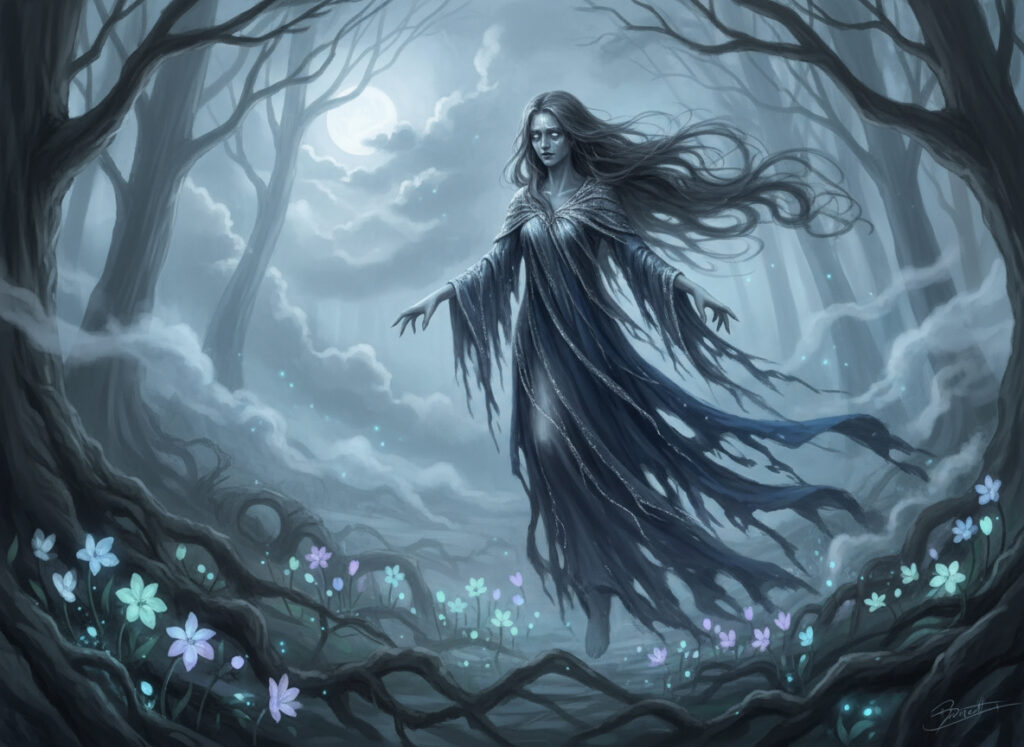
For centuries, legends claimed that a banshee attached herself only to the oldest and purest of Irish families—specifically those whose last names began with “O” or “Mac” (like the O’Neills, O’Briens, O’Connors, and Kavanaghs).
When a member of that family was near death, the banshee would appear at night and release a “keen” (a mourning wail). This sound was described as a terrifying, mournful shriek that blended the crying of a woman, the call of a wild goose, and the howling of a dog.
Famous Encounters in Folklore
- The O’Brien Banshee: Aodh Mac nam Boirche, a historical king, supposedly had a banshee named Aibell who ruled over 25 other banshees. According to legend, King Brian Boru knew he would not survive the Battle of Clontarf in 1014 because Aibell had appeared to him washing clothes in the river.
- King James I of Scotland: Though primarily an Irish myth, the legend spread. In 1437, it was recorded that an Irish seer or “banshee” approached King James I to warn him of his impending assassination, though her warnings were ignored.
- The Chorus of Banshees: It was said that if a truly great or holy person was dying, multiple banshees would appear and wail together to mark the passing of a legend.
The Kelpie
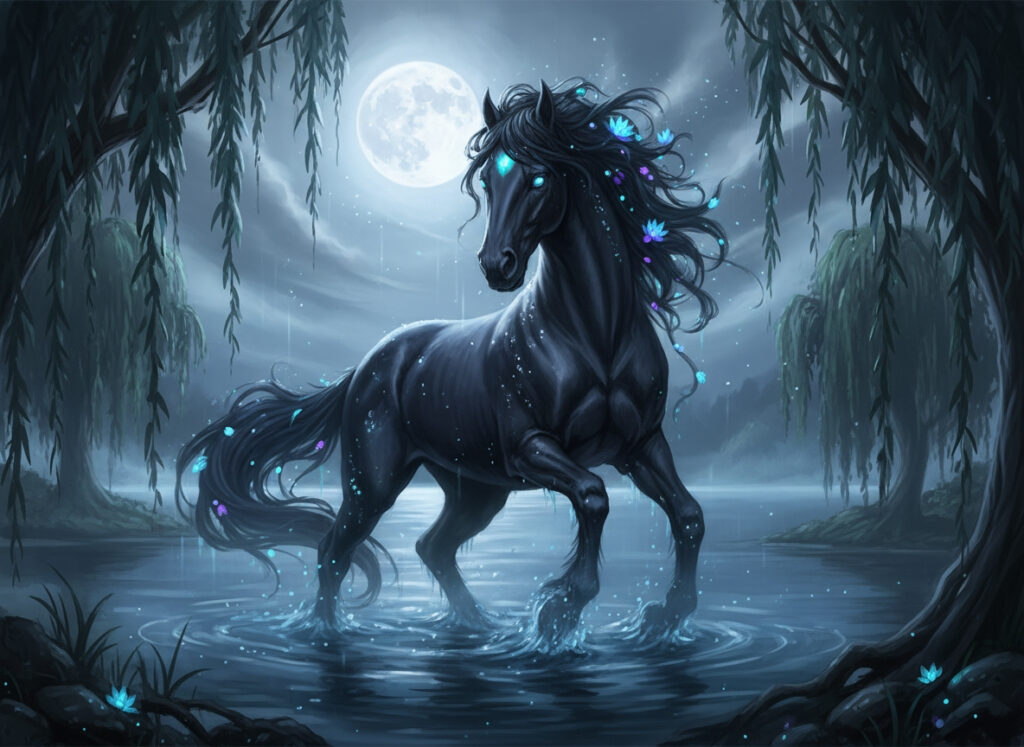
In Scottish mythology, a kelpie is a shape-shifting water spirit that inhabits the deep lochs and fast-flowing rivers of Scotland. Unlike the banshee, which acts primarily as a warning, the kelpie is a predatory, malevolent creature designed to lure humans to a watery grave.
The kelpie almost always appears as a beautiful, strong, and exceptionally tame-looking horse standing near the edge of the water. It peacefully grazes, practically inviting a weary traveler or a group of curious children to climb onto its back.
The trap springs the moment a rider mounts the creature. The kelpie’s skin becomes magically adhesive. Trapped and entirely unable to dismount, the terrified victim is carried off as the kelpie charges into the deepest part of the water to drown and devour them—traditionally leaving only the victim’s liver or entrails to wash ashore the next day.
Famous Encounters in Folklore
The Tale of the Ten Children: The most famous (and gruesome) kelpie cautionary tale involves ten children playing by a loch. The kelpie appears, and nine children eagerly climb onto its magically lengthening back. The tenth child stays on the ground but reaches out to stroke the horse’s nose. His finger instantly sticks to the hide. Realizing the danger as the monster lunges for the water, the boy uses his pocket knife to cut off his own finger—saving his own life while helplessly watching his nine friends get dragged under.
The MacGregor’s Bridle: A real Scottish clan, the MacGregors, famously claimed for centuries to possess a true kelpie’s bridle, passed down through generations. According to their family legend, a clever ancestor managed to ambush a kelpie, bridle it, and force the monster to drag massive stones to build his castle.
The Loch Ness Connection: Long before pop culture decided the Loch Ness Monster was a surviving dinosaur, the ancient legends of the loch—dating all the way back to the 6th century with St. Columba—actually described a kelpie or “water beast” snatching locals from the shore.
The Leprechauns
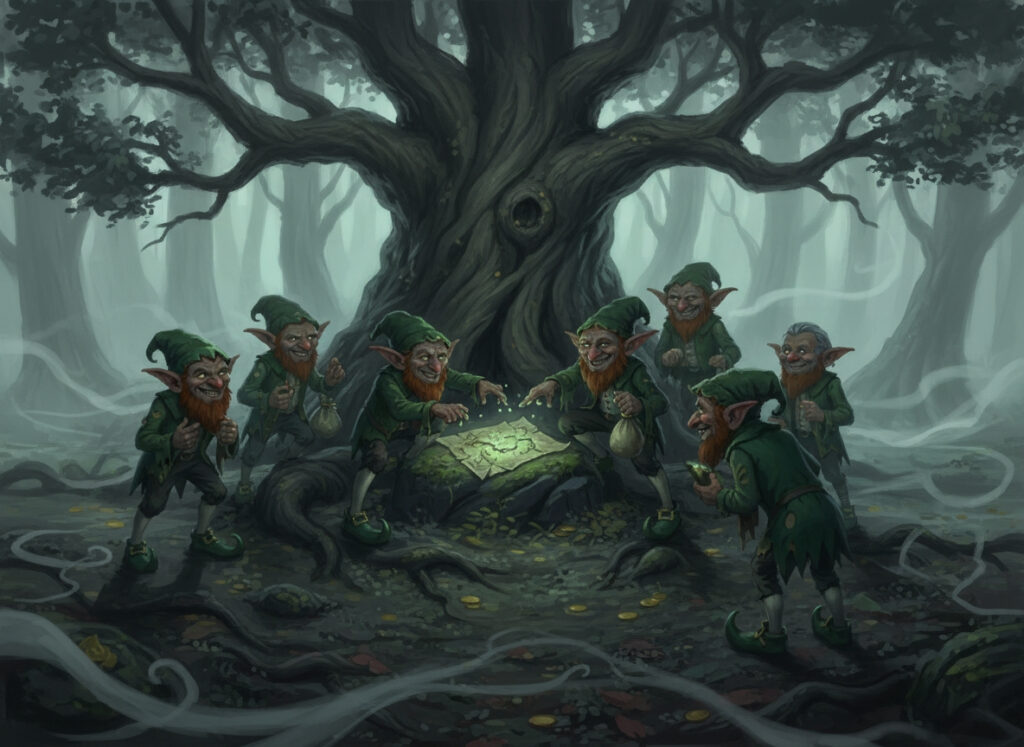
Leprechauns are the designated cobblers (shoemakers) of the fairy world. Because the other fairies love to dance, they constantly wear out their shoes, making the leprechauns incredibly wealthy. To protect their earnings from greedy humans, they bury their gold in hidden pots, often said to be at the end of a rainbow.
If a human manages to catch a leprechaun, usually by sneaking up on one while he is distracted by his shoemaking, the fairy must grant his captor three wishes or surrender his gold in exchange for his freedom. However, there is a catch: the moment the human takes their eyes off the leprechaun, the fairy vanishes instantly.
Famous Encounters in Folklore
The Field of Boliauns (Ragwort): One of the most famous folktales involves a man named Tom Fitzpatrick who captured a leprechaun and forced him to reveal where his gold was buried. The leprechaun pointed to a specific ragwort plant in a massive field. Tom didn’t have a shovel, so he tied a bright red garter around the plant to mark it and made the leprechaun swear not to remove the ribbon. The leprechaun promised and vanished. When Tom returned with a shovel, he found that the leprechaun had kept his promise—but had tied an identical red garter around every single plant in the field, making it impossible to find the gold.
King Fergus mac Léti: The earliest known reference to leprechauns (or lúchorpáin) comes from an 8th-century tale. King Fergus of Ulster falls asleep by the sea and wakes up to find three tiny water sprites dragging him into the ocean. He captures them, and in exchange for their release, they grant him the ability to breathe underwater.
The Clurichaun Cousin: Leprechauns have a lesser-known, darker cousin called the Clurichaun. While leprechauns are hard workers, Clurichauns are usually described as drunkards who haunt wine cellars and breweries, causing mischief and riding sheep or dogs like horses in the middle of the night.
When do these creatures appear in legend?
Many creatures appear during significant events, such as death (Banshee), famine (Fear Gorta), or while traveling near water (Kelpie). Their appearances often mark a warning or supernatural occurrence.
Frequently Asked Questions (FAQ)
What makes the Banshee famous in Celtic legends?
The Banshee is renowned for her supernatural wail, which is believed to foretell death in Irish families. She appears in rivers, forests, and near homes.
Why is the Kelpie feared in Scottish folklore?
The Kelpie is feared because it lures travelers, often children, into water to drown them. It can transform into a horse or a beautiful woman.
How are Irish Fairies different from other mythological beings?
Irish Fairies (Daoine Sidhe) are considered spiritual entities with magical powers. Unlike other creatures, they can be helpful or vengeful depending on how they’re treated.
Where can you find Leprechauns in Celtic mythology?
Leprechauns are mainly found in Irish folklore, often depicted as solitary tricksters guarding pots of gold at the end of rainbows.
When do Púca stories occur in Irish legend?
Púca stories often occur around harvest time and Samhain, a Celtic festival marking the end of the harvest season.
What is the role of Abhartach in Irish vampire myths?
Abhartach is considered one of the earliest vampire legends, rising from his grave to demand blood from the living.
How do Oilliphéist legends relate to rivers?
Oilliphéist are dragon-like monsters said to inhabit rivers and lakes, sometimes causing floods or swallowing travelers.
Why is Fear Gorta associated with famine?
Fear Gorta appears during times of scarcity, warning of impending famine. Kindness to this spirit can bring blessings, while neglect brings misfortune.