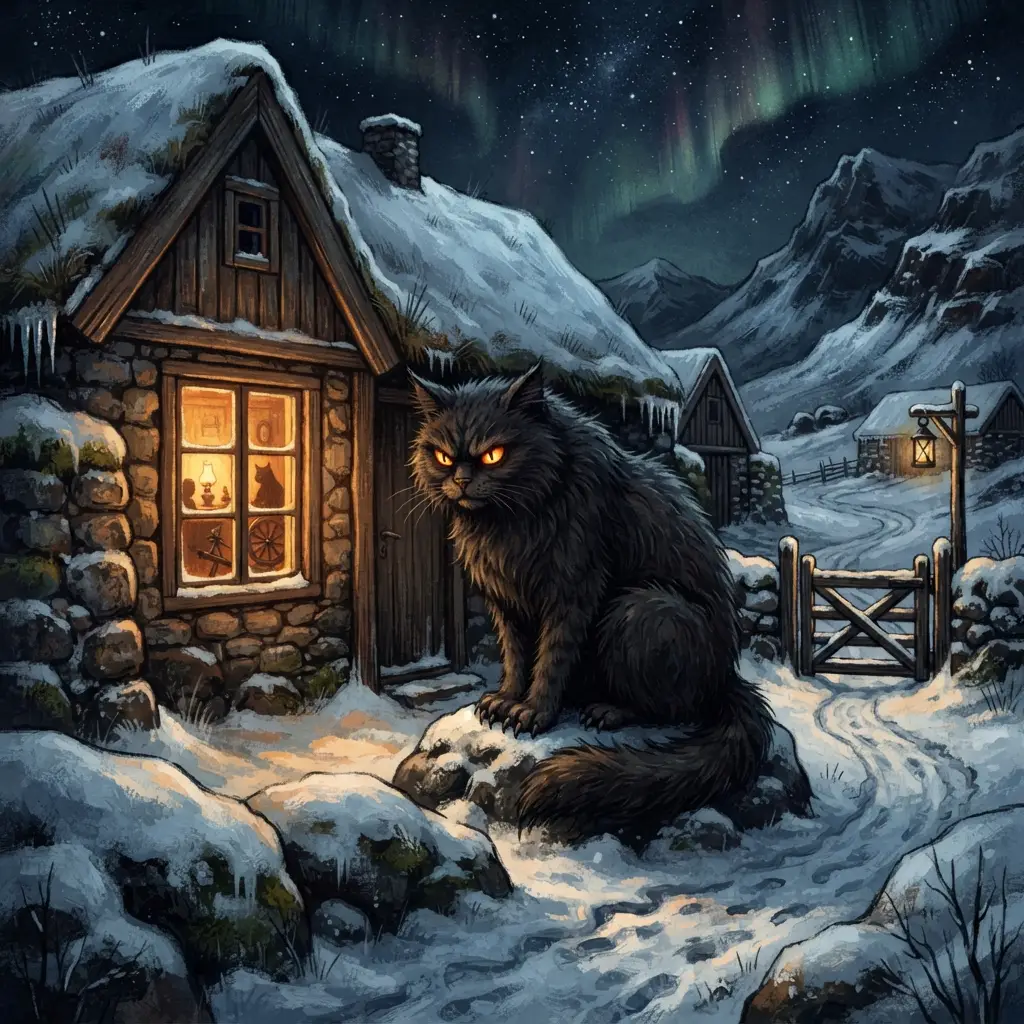
What is the Yule Cat? The Yule Cat is a giant cat from Icelandic folklore said to roam at Christmas and punish people who did not receive new clothes before Christmas Eve. The creature is also called Jólakötturinn, a famous winter figure in Icelandic seasonal tradition.
What is the Yule Cat in Icelandic folklore?
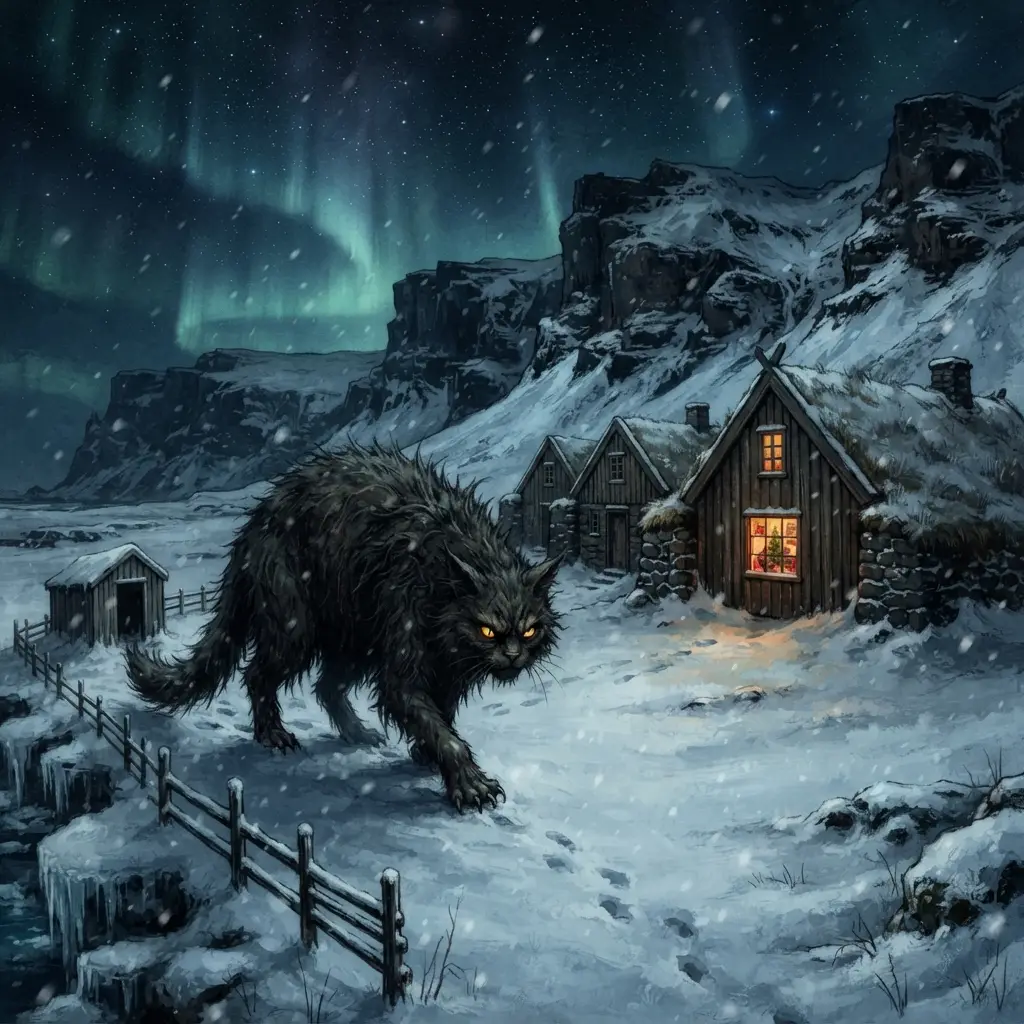
The Yule Cat is a legendary Christmas beast connected to Iceland’s winter folklore. In many retellings, the cat appears as an enormous, frightening animal that prowls the countryside during the holiday season.
The legend is tied to a social custom: people who finished seasonal work, especially wool processing, could be rewarded with new clothing. People who did not receive new clothes were said to be at risk from the Yule Cat.
How does the Yule Cat legend work?
The story works as both a folklore warning and a seasonal moral tale. It links hard work, winter survival, and holiday reward into one memorable monster story.
A simple version of the legend follows this pattern:
- Autumn work had to be completed before winter festivities.
- Workers who helped process wool might receive new clothes.
- People without new garments became the Yule Cat’s targets in the story.
This made the creature a useful symbol in rural society, where finishing textile work before winter mattered.
Why is the Yule Cat associated with new clothes?
The new clothes detail reflects older Icelandic farming life. Wool production was economically important, and clothing was both practical and valuable.
In folklore, receiving a garment showed that a person had contributed to household work or had been properly provided for before the holiday. The Yule Cat therefore became a dramatic way to reinforce seasonal discipline.
What does the Yule Cat look like?
Descriptions vary, but most versions present the Yule Cat as:
- Enormous compared with a normal cat
- Dark or black in color
- Sharp-eyed or glowing-eyed in winter darkness
- Predatory and intimidating rather than magical or helpful
Some modern depictions are playful, but the older tone is more threatening than festive.
Yule Cat vs other winter folklore figures
The Yule Cat belongs to a wider network of Icelandic winter legends, but it has a distinct role.
| Figure | Folklore role | Main warning or lesson | Typical image |
|---|---|---|---|
| Yule Cat | Giant Christmas beast | Receive new clothes; complete seasonal work | Huge prowling cat |
| Grýla | Monstrous mother figure | Punishes badly behaved children in later retellings | Ogre-like giantess |
| Yule Lads | Seasonal trickster figures | Mischief, behavior warnings, holiday folklore | Multiple troll-like visitors |
Readers who enjoy winter legends may also explore the site’s broader Codex of the Beasts, compare symbolic animal lore with Wolves, or browse story-driven myth investigations in The Journal.
When did the Yule Cat become well known?
Written references to the Yule Cat appear relatively late compared with some older mythic traditions. The figure became especially well known through a 1932 poem by Jóhannes úr Kötlum, which helped fix the image of the creature in modern cultural memory.
Today, the Yule Cat appears in seasonal art, tourism, and public displays in Reykjavík. That modern visibility has made the figure one of the best-known creatures in Icelandic Christmas folklore.
Why does the Yule Cat matter today?
The Yule Cat matters because it preserves a link between folklore, labor history, and winter custom. Unlike many holiday creatures that became harmless gift-bringers, the Yule Cat still represents anxiety about scarcity, readiness, and social expectation.
For modern readers, the legend offers a clear example of how mythical creatures reflect real historical conditions. The monster is memorable, but the deeper story is about work, clothing, and surviving winter.
Quick facts about the Yule Cat
- Origin: Icelandic folklore
- Icelandic name: Jólakötturinn
- Season: Christmas and winter
- Core belief: The cat targets people without new clothes before Christmas
- Cultural role: Warning tale linked to work and seasonal reward
- Modern status: Popular in Icelandic holiday storytelling and public imagery
FAQ
Why is the Yule Cat dangerous?
The Yule Cat is dangerous in folklore because it punishes people who did not receive new clothes before Christmas. The danger makes the lesson vivid and easy to remember.
When does the Yule Cat appear?
The Yule Cat appears during the Christmas season, especially in the days leading up to Christmas Eve. The legend is tied to winter celebrations and end-of-year customs.
Where does the Yule Cat come from?
The Yule Cat comes from Icelandic folklore. The story developed within Iceland’s winter traditions and rural social life.
How long has the Yule Cat legend existed?
The legend is commonly treated as old tradition, but documented written references are largely from the 19th century onward. The figure gained wider recognition in the 20th century.
Is the Yule Cat the same as Grýla or the Yule Lads?
No. The Yule Cat is a separate figure, though the creature is often grouped with other Icelandic Christmas beings in later retellings.
What does Jólakötturinn mean?
Jólakötturinn is the Icelandic name for the Yule Cat. It refers to the same folklore creature found in English-language explanations.
Is the Yule Cat evil or symbolic?
The Yule Cat is both a threatening monster in story form and a symbol of seasonal expectations. Folklore often uses fearsome creatures to express practical social rules.
Can the Yule Cat still be seen in Iceland today?
The folklore creature is not treated as a real animal, but its image appears in decorations, storytelling, and holiday displays. Modern public art in Reykjavík has helped keep the legend visible.